
Pre-Hospital Emergency Care
First Response Emergency Care Level 3 (FREC 3) Course in Manchester
Our FREC 3 course in Manchester is a five-day, face-to-face programme leading to the Qualsafe Level 3 Award in First Response Emergency Care (RQF). It is designed for event medics, first responders, security teams and others who may need to manage serious illness or injury before more advanced clinical help arrives. You will learn patient assessment, airway management, oxygen, trauma and bleeding control, then complete formal theory and practical assessments at our Qualsafe Approved Centre in Levenshulme.
- 35 guided learning hours
- 53 hours total qualification time
- 3 theory papers, 1 exam and 6 practical assessments
- Adult, child and infant CPR and AED training
- Trauma, catastrophic bleeding and shock management
- Realistic medical and trauma scenarios
- Small-group practical teaching
- Free dedicated parking at the centre
Course summary
- Qualification
- Qualsafe Awards Qualsafe Level 3 Award in First Response Emergency Care (RQF)
- Duration
- 5 days
- Format
- Face-to-face
- Location
- Manchester
- CPD
- 35
- Certificate valid for
- 3 years
- Price
- £420
- Next date
- Monday 26 – Friday 30 October 2026
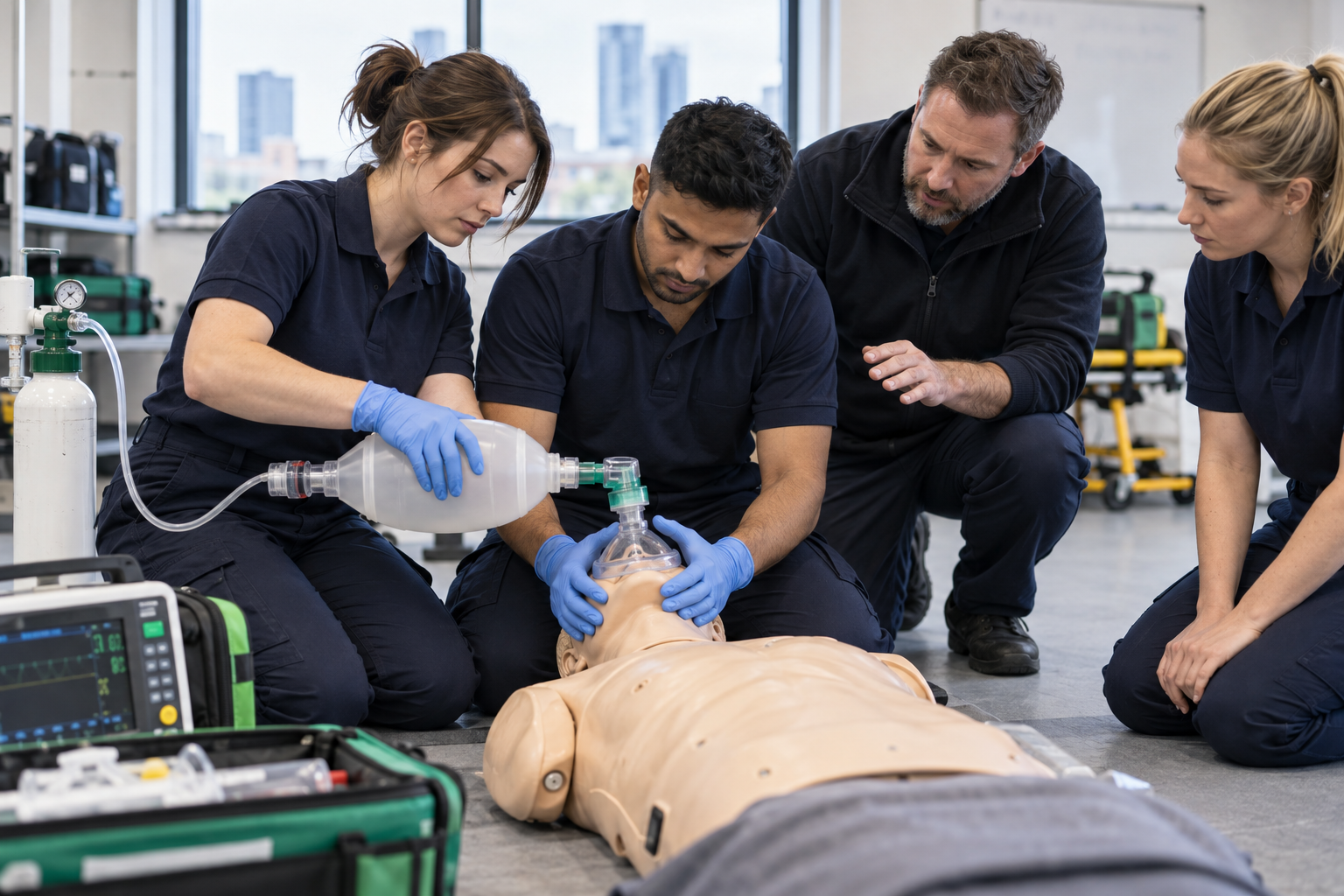
FREC 3 training in Manchester that goes beyond first aid
If your role could put you first on scene at a collapse, a crash or a serious injury, workplace first aid only takes you so far. Our FREC 3 course in Manchester gives you a structured, clinical approach to the seriously ill or injured patient, from making the scene safe to handing over to the ambulance crew or clinical team.
Over five intensive days you will work through airway and ventilation skills, oxygen therapy, resuscitation across all ages, medical emergencies and major trauma, then prove your competence in formal theory and practical assessments. Successful candidates achieve the nationally regulated Qualsafe Level 3 Award in First Response Emergency Care (RQF).
Teaching is hands-on and in small groups. Choose a date below to reserve your place.
Carry out a dynamic risk assessment and make an emergency scene safe before treatment Assess medical and trauma patients using a structured primary and secondary survey Maintain an open airway using positioning, manoeuvres, suction and airway adjuncts Deliver oxygen and support ventilation with a bag-mask device within your scope of practice Perform high-quality CPR for adults, children and infants and use an AED Control catastrophic bleeding and recognise and manage shock Recognise and give first-response care for common medical emergencies Monitor vital signs, recognise deterioration and give a structured clinical handover
Further reading
- What is FREC 3? First Response Emergency Care explained: Who FREC 3 is for, what the five days cover and how to renew it.
Upcoming FREC 3 course dates in Manchester
£420
Book this dateMore dates
Choosing a date takes you straight to booking with that date selected.
Course overview
FREC 3 develops a systematic, clinical approach to patients who are seriously ill or injured before they reach hospital. It goes well beyond workplace first aid, with far more depth in airway management, oxygen, patient monitoring and trauma care.
The programme follows the way a real emergency unfolds. You learn to approach a scene safely and work out what has happened, then build a structured primary and secondary survey. From there you add airway and ventilation skills, oxygen therapy and resuscitation for adults, children and infants, before moving on to acute medical presentations and major trauma, including catastrophic bleeding, shock, head, spinal and chest injuries, burns and environmental emergencies.
Throughout the week, theory is put straight into practice through realistic scenarios involving cardiac arrest, deteriorating patients and competing priorities. You will practise communicating with casualties and other responders, escalating care appropriately and giving a clear, structured handover.
The qualification carries 35 guided learning hours within a total qualification time of 53 hours, so you must attend the full five days and complete every assessment.
Who this course is for
This course is for you if your job, or the job you are working towards, could make you the first person responsible for a seriously ill or injured patient outside hospital. That might be at a festival or sports event, on an expedition, on a high-risk worksite or while supporting the emergency services.
It is also a strong next step if you already hold a workplace first-aid certificate and want a much broader emergency-care skill set, or if you are a healthcare professional who wants more confidence in pre-hospital settings. FREC 3 can also be the foundation for further pre-hospital care qualifications as your career develops.
Who should attend
- Event medical staff and motorsport or sporting-event medical teams
- Community and emergency first responders
- Ambulance support staff
- Security personnel, close protection operatives and door supervisors with enhanced medical duties
- Police and fire service personnel
- Search and rescue teams, and outdoor and expedition staff
- Military personnel
- Employees in high-risk industries
- Healthcare professionals building pre-hospital emergency-care skills
Entry requirements
FREC 3 is an intensive, hands-on programme. To take part and achieve the qualification you will need to:
- attend all five days in full
- take part in every practical exercise, including CPR and other skills performed at floor level
- complete all theory and practical assessments
- demonstrate safe, professional behaviour throughout
- give accurate personal details for your Qualsafe registration
If you need any reasonable adjustments, please tell us before the course so we can discuss them with you.
What you will learn
- Carry out a dynamic risk assessment and make an emergency scene safe before treatment
- Assess medical and trauma patients using a structured primary and secondary survey
- Maintain an open airway using positioning, manoeuvres, suction and airway adjuncts
- Deliver oxygen and support ventilation with a bag-mask device within your scope of practice
- Perform high-quality CPR for adults, children and infants and use an AED
- Control catastrophic bleeding and recognise and manage shock
- Recognise and give first-response care for common medical emergencies
- Monitor vital signs, recognise deterioration and give a structured clinical handover
Course content
-
1 Scene safety and incident assessment
How to approach an emergency without creating further risk. Covers dynamic risk assessment, mechanism of injury, number of casualties, personal protective equipment and calling for the right resources.By the end of this part you will be able to:
- Judge whether a scene is safe to enter
- Estimate casualty numbers and the resources needed
-
2 Patient assessment and monitoring
A structured method for medical and trauma patients: primary survey, patient history, secondary assessment and ongoing reassessment. Includes respiratory rate, pulse, level of consciousness, skin signs, blood pressure and oxygen saturation where appropriate, with the emphasis on trends rather than single readings.By the end of this part you will be able to:
- Identify and act on life-threatening problems first
- Track observations over time to spot deterioration
-
3 Airway, oxygen and ventilation
Recognising airway compromise and inadequate breathing, then using positioning, basic manoeuvres, suction, oropharyngeal airways and bag-mask ventilation. Covers nasopharyngeal airway considerations, oxygen delivery devices and safe cylinder handling.By the end of this part you will be able to:
- Select an appropriate oxygen delivery device
- Handle and prepare oxygen cylinders safely
-
4 Resuscitation and defibrillation
Recognising cardiac arrest and delivering CPR for adults, children and infants, with effective ventilation and AED use. Practised as a team, with a focus on minimising interruptions to chest compressions. -
5 Medical emergencies
Early recognition, first-response treatment and escalation for chest pain and suspected acute coronary syndrome, stroke, seizures, asthma, anaphylaxis, diabetes-related emergencies, reduced consciousness, breathing difficulties and poisoning. -
6 Trauma and catastrophic bleeding
A priority-based approach to major trauma: catastrophic haemorrhage, shock, head and spinal injuries, chest trauma, limb injuries and fractures, wounds, burns and environmental emergencies. Includes direct pressure and haemorrhage-control equipment.By the end of this part you will be able to:
- Prioritise immediate threats before detailed assessment
- Recognise how quickly severe bleeding becomes life-threateni
-
7 Communication, escalation and handover
Talking calmly with patients, taking a relevant history, working with other responders, requesting extra resources, recording findings and treatment, and giving a clear, structured clinical handover. -
8 Scenario practice and assessment
Realistic scenarios involving cardiac arrest, deteriorating patients and multiple competing priorities bring every skill together. The course concludes with the formal Qualsafe theory papers, invigilated examination and practical assessments.
Course format
- Duration
- 5 days
- Delivery
- Intensive practical skills teaching and realistic medical and trauma scenarios
Assessment
- How you are assessed
- FREC 3 is formally assessed through multiple-choice theory papers, an invigilated examination and a series of practical assessments and skills tests.
- Practical assessment
- Six practical assessments and skills tests covering the core emergency-care skills taught on the course.
- Written assessment
- Three multiple-choice theory assessments and one invigilated examination.
Certification
- Requirements
- Attend all five days, take part in every practical session and meet the required standard in all theory and practical assessments. Booking and attendance alone do not guarantee the qualification.
- Certificate valid for
- 3 years
Training near you
PLAB Guide Training Centre delivers First Response Emergency Care Level 3 (FREC 3) Course in Manchester, convenient for learners travelling from Levenshulme, Longsight, Burnage, Gorton, Didsbury and surrounding areas.
Related courses
You may also like
-
 View course
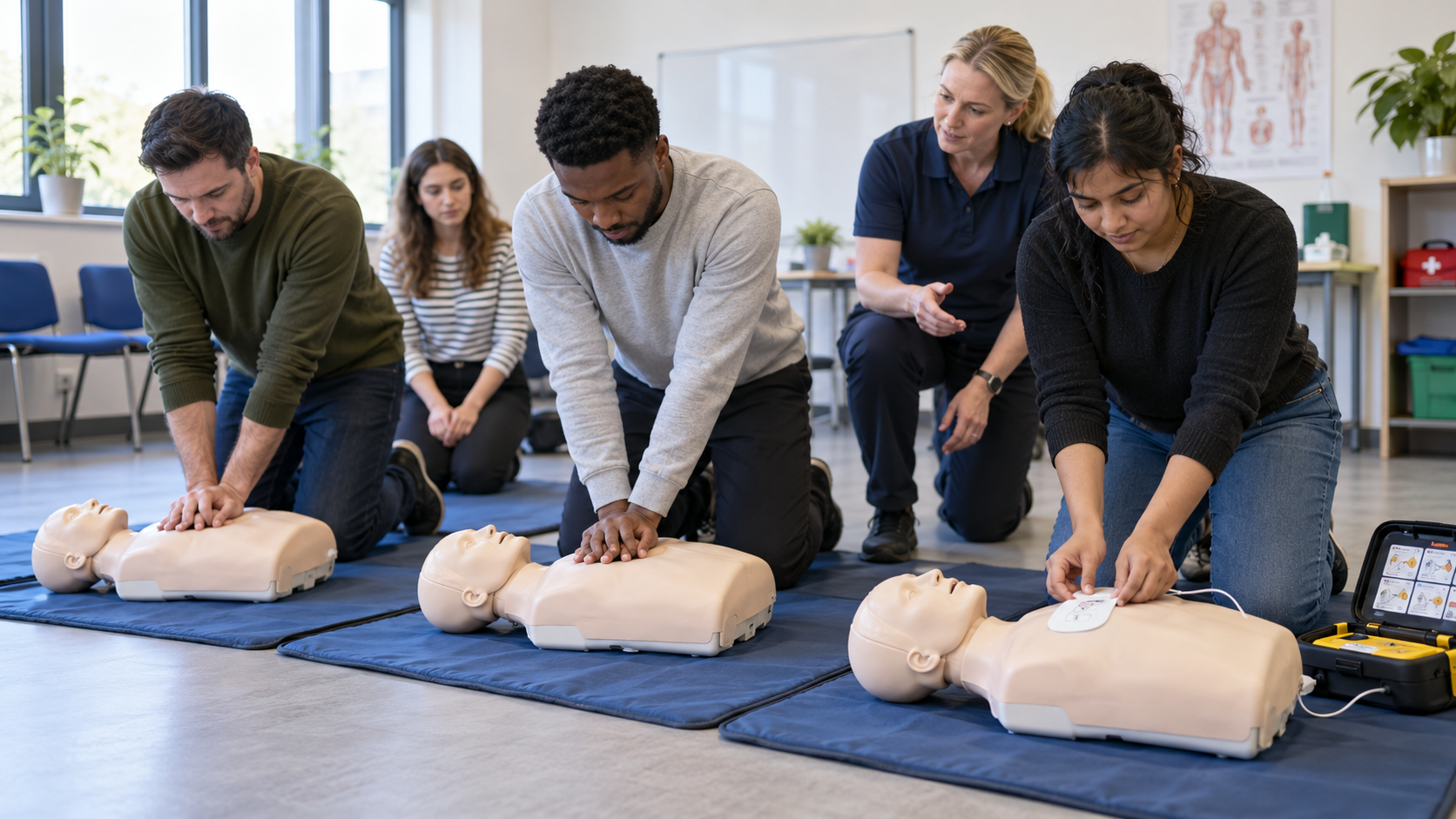
Qualsafe Level 3 First Aid at Work (FAW) Course in Manchester
Our First Aid at Work course in Manchester leads to the Qualsafe Level 3 Award in First Aid at Work (RQF), the regulated qualification for appointed workplace first aiders…
Sun 15 – Mon 16 Nov, PLAB Guide Training Centre
12 places available
-
 View course
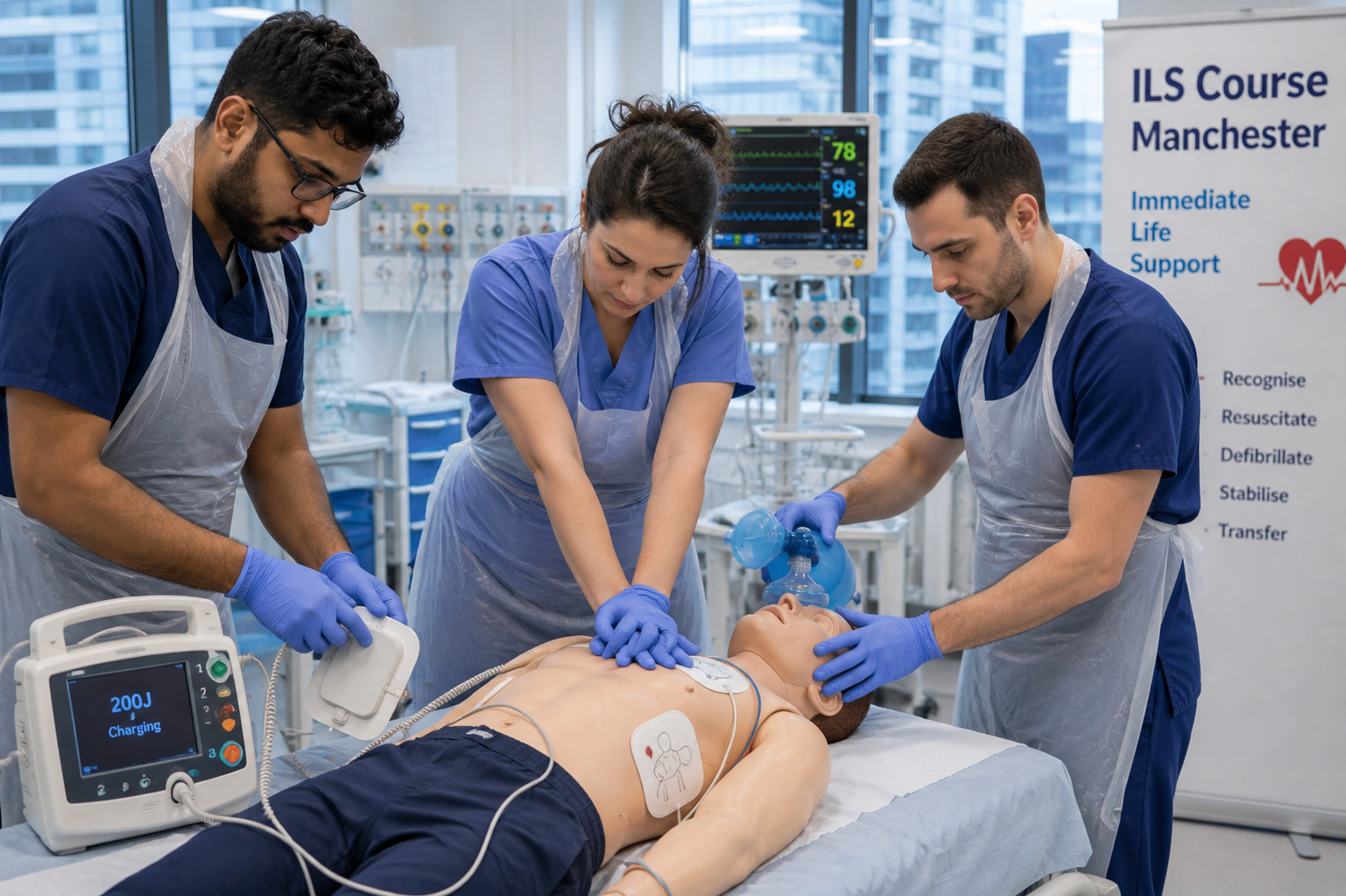
Full-Day Immediate Life Support (ILS) Course in Manchester
Our full-day ILS course in Manchester gives healthcare professionals the practical skills to recognise the deteriorating adult patient, start high-quality CPR, defibrillate…
Mon 9 Nov, PLAB Guide Training Centre
6 places available
Alternatives
-
 View course
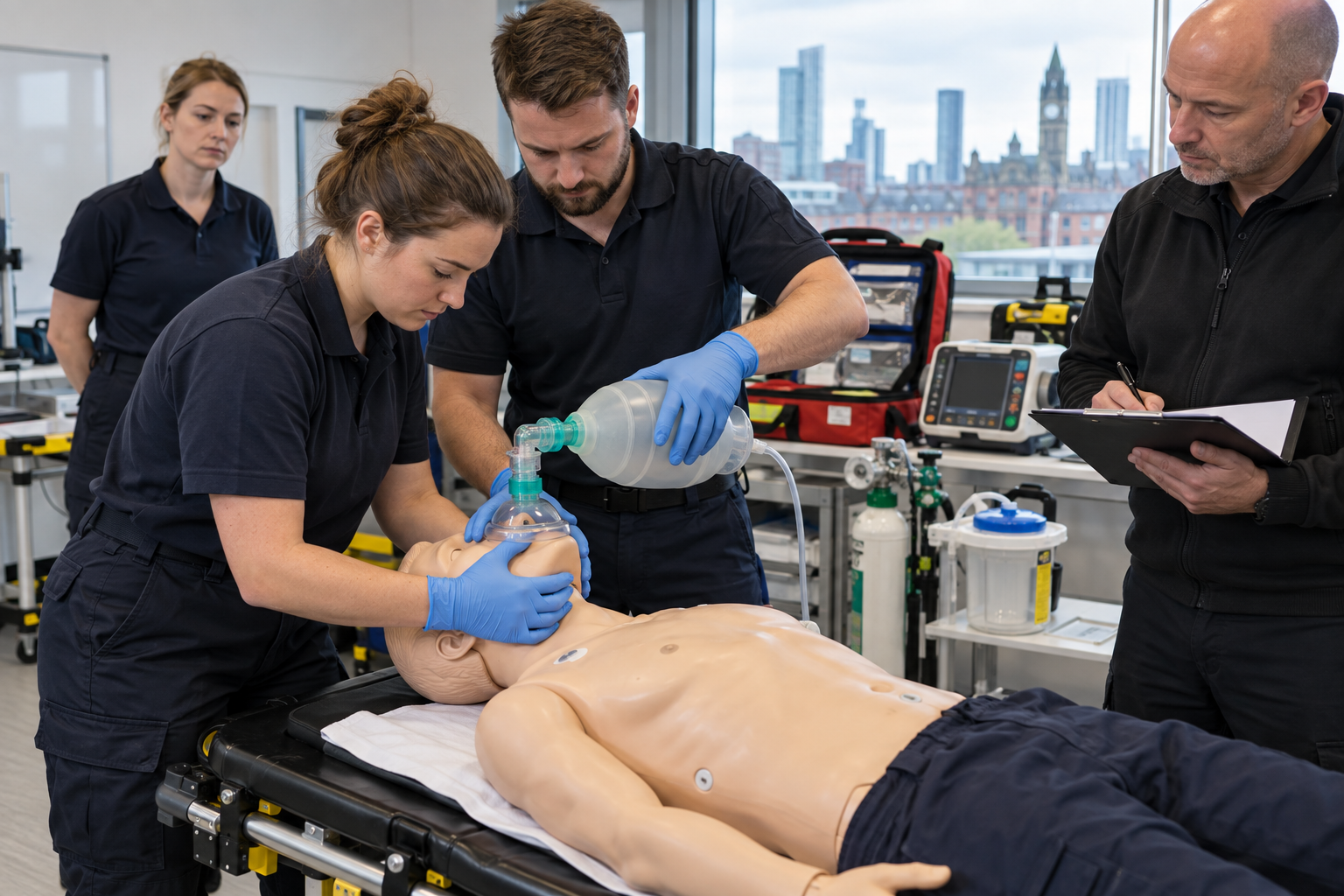
First Response Emergency Care (FREC 3) Requalification Course in Manchester
Our FREC 3 requalification course in Manchester lets you renew your Qualsafe Level 3 Award in First Response Emergency Care (RQF) in three practical days. Designed for current…
Wed 11 – Fri 13 Nov, PLAB Guide Training Centre
12 places available
Compare courses
| First Response Emergency Care Level 3 (FREC 3) Course in Manchester | First Response Emergency Care (FREC 3) Requalification Course in Manchester | |
|---|---|---|
| Duration | 5 days | 3 days |
| Qualification | Qualsafe Awards Qualsafe Level 3 Award in First Response Emergency Care (RQF) | Qualsafe Awards Qualsafe Level 3 Award in First Response Emergency Care (RQF) |
| Format | Face-to-face | Face-to-face |
| Certificate valid for | 3 years | 3 years |
| Price | £420 | £275 |
See all Pre-Hospital Emergency Care courses
Frequently asked questions
What is the difference between FREC 3 and a First Aid at Work course?
How long is a FREC 3 certificate valid for?
How is the FREC 3 qualification assessed?
I already have a first aid certificate. Is FREC 3 the right next step?
How many hours of learning does FREC 3 involve?
Can I become a paramedic or ambulance worker with FREC 3?
Is there parking at the training centre?
What should I wear on the course?
Who awards the FREC 3 qualification?
What if I need reasonable adjustments?
Ready to book?
The next date with places is Monday 26 – Friday 30 October 2026
Book now