
Mandatory Training
Level 3 Allergy and Anaphylaxis Awareness Course in Manchester
Our allergy and anaphylaxis awareness course in Manchester leads to the Qualsafe Level 3 Award in Allergy and Anaphylaxis Awareness (RQF), an Ofqual-regulated qualification completed in two hours. Designed for teachers, support staff and volunteers in schools and education settings, it teaches you to recognise allergic reactions, respond to anaphylaxis and asthma, and understand your part in your school's allergy safety arrangements under Benedict's Law.
- Designed for school and education staff
- Supports Benedict's Law staff training duties
- Covers anaphylaxis, asthma and auto-injectors
- Includes allergy policies and healthcare plans
- Taught by experienced healthcare instructors
- Whole-school and on-site training available
Course summary
- Qualification
- Qualsafe Awards Qualsafe Level 3 Award in Allergy and Anaphylaxis Awareness (RQF)
- Duration
- 2 hours
- Format
- Face-to-face
- Location
- Manchester
- Certificate valid for
- 1 year
- Price
- £55
- Next date
- Saturday 17 October 2026

Allergy and anaphylaxis training for school staff in Manchester
A severe allergic reaction can become life-threatening within minutes, and the first adult to notice is often a teacher, lunchtime supervisor or receptionist rather than a first aider. Our allergy and anaphylaxis awareness course in Manchester gives everyone who works with children the knowledge to spot a reaction early, act quickly and hand over clearly to the emergency services.
From the 2026–27 academic year, Benedict's Law requires maintained schools, academies and pupil referral units in England to have an allergy safety policy, and the statutory guidance sets out training for staff. This two-hour regulated award is designed to help your school meet that expectation. Choose a date below, or ask us about training your whole team.
Why schools train with PLAB Guide in Manchester
PLAB Guide Training Centre is a Qualsafe Awards Approved Centre (centre number 908553), so every successful learner receives a nationally recognised, Ofqual-regulated certificate rather than an attendance note.
Our instructors are experienced healthcare and first aid professionals. They bring real clinical understanding to the session but teach it in plain language, so non-clinical staff can follow every step with confidence.
We go beyond basic awareness: the focus is on what you would actually do if a pupil started to react in your classroom, dining hall or on a school trip. Book individual places at our Levenshulme centre, or arrange a session for your whole staff at your own school.
Further reading
- How many first aiders does my workplace need?: What HSE guidance says, and how to choose between EFAW and FAW.
Upcoming dates
From £55
Book this dateMore dates
Show 3 more dates
Choosing a date takes you straight to booking with that date selected.
Course overview
This focused two-hour session starts with the basics: what an allergy is, what happens in the body during a reaction, and why the same allergen can affect two children very differently. You will look at common food and environmental triggers, and at why a previously mild reaction is no guarantee that the next one will be mild too.
The course then moves to recognition and response. You will learn the airway, breathing and circulation warning signs of anaphylaxis, how asthma can overlap with an allergic reaction, and what to do in the first minutes: calling for help, following the child's emergency plan, calling 999, understanding the role of prescribed and spare adrenaline auto-injectors, monitoring the child and giving a clear handover.
The final part looks at allergy safety across the whole school day. It covers individual healthcare plans, reducing avoidable exposure at mealtimes and on trips, communicating with parents and carers, supporting the wellbeing of children who live with allergies, and recording incidents and near misses so your school can learn from them.
Assessment and certification
The course ends with the assessment set by Qualsafe Awards. Successful learners receive the Qualsafe Level 3 Award in Allergy and Anaphylaxis Awareness (RQF).
Who this course is for
This course is for anyone in a school or education setting who could be the first adult with a child when a reaction begins. Allergic emergencies happen in classrooms, dining halls, playgrounds, on minibuses and on school trips, and they do not wait for the designated first aider to arrive.
You do not need a clinical background. The session is taught in plain language so that teaching, support, catering and site staff all leave knowing what to look for and what to do, and your school can show that its staff training reflects a whole-school approach to allergy safety.
Who should attend
- Teachers, teaching assistants and SEND staff
- Headteachers, senior leaders and pastoral or safeguarding teams
- School administrators and reception staff
- Lunchtime supervisors and school catering staff
- School nurses and healthcare staff
- PE staff and sports coaches
- Minibus, transport, caretaking and site staff
- After-school club staff and school volunteers
What you will learn
- Explain what an allergy is and how an allergic reaction develops
- Recognise common allergens and the signs of mild, moderate and severe reactions
- Identify the warning signs of anaphylaxis and act without delay
- Describe the role of adrenaline auto-injectors and when to call 999
- Recognise and respond to an asthma attack in a child or young person
- Follow individual healthcare plans and your school's allergy safety procedures
- Support the emotional wellbeing and inclusion of pupils with allergies
- Record and report allergy incidents and near misses accurately
Course content
-
1 Understanding allergy
What an allergy is, how the immune system reacts, and the common food and environmental triggers. Why reactions vary between individuals and why past severity does not predict the next reaction. -
2 Recognising anaphylaxis
The airway, breathing, circulation and skin changes that suggest anaphylaxis, from voice change and wheeze to collapse. Why rapid deterioration means acting early. -
3 Emergency response and handover
Calling for help, following the child's emergency plan, calling 999, monitoring the child and giving a clear handover to the ambulance crew. -
4 Adrenaline auto-injectors
Why adrenaline is used in anaphylaxis, the role of prescribed and spare emergency devices, and why monitoring continues after treatment. -
5 Asthma awareness
Common asthma symptoms, signs of worsening respiratory distress, how to respond to an asthma attack and when to get emergency help. -
6 Allergy safety across the school
Individual healthcare plans, reducing avoidable exposure, catering and school trips, and communication between staff, pupils and parents or carers. -
7 Wellbeing, recording and learning
The anxiety, social exclusion and stigma children with allergies can face, and how to promote inclusion. Recording incidents and near misses and reviewing prevention afterwards.
Course format
- Duration
- 2 hours
Assessment
- How you are assessed
- Knowledge-based assessment set by Qualsafe Awards. As an awareness qualification, there is no practical assessment.
- Practical assessment
- Attend the full course and successfully complete the Qualsafe assessment. Booking and attendance alone do not guarantee certification.
Certification
- Certificate valid for
- 1 year
Training near you
PLAB Guide Training Centre delivers Level 3 Allergy and Anaphylaxis Awareness Course in Manchester, convenient for learners travelling from Levenshulme, Longsight, Burnage, Gorton, Didsbury and surrounding areas.
Related courses
You may also like
-
 View course
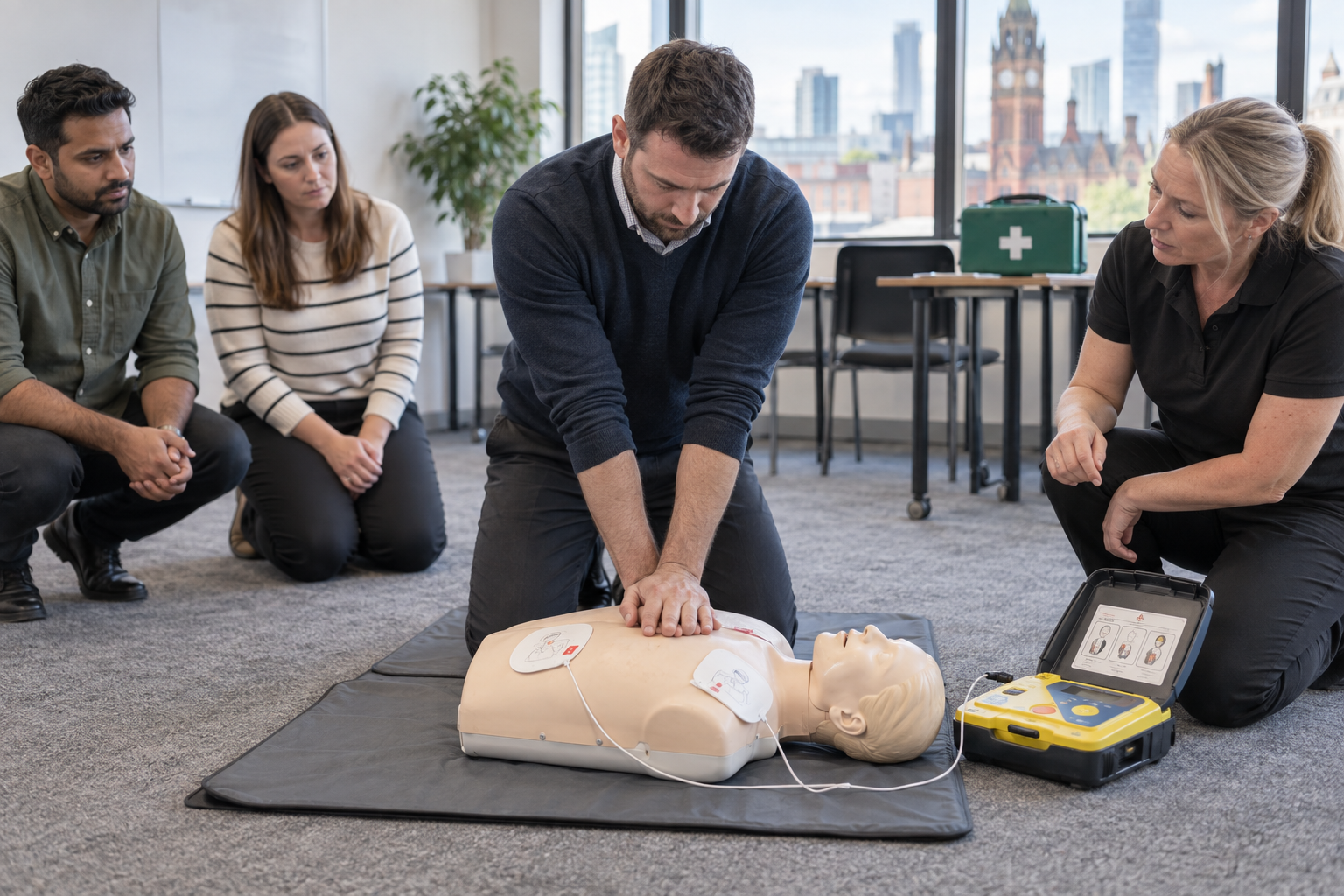
Emergency First Aid at Work (EFAW) Course in Manchester
Our Emergency First Aid at Work course in Manchester is a one-day, hands-on programme that leads to the Qualsafe Level 3 Award in Emergency First Aid at Work (RQF). It is built…
Mon 9 Nov, PLAB Guide Training Centre
12 places available
-
 View course
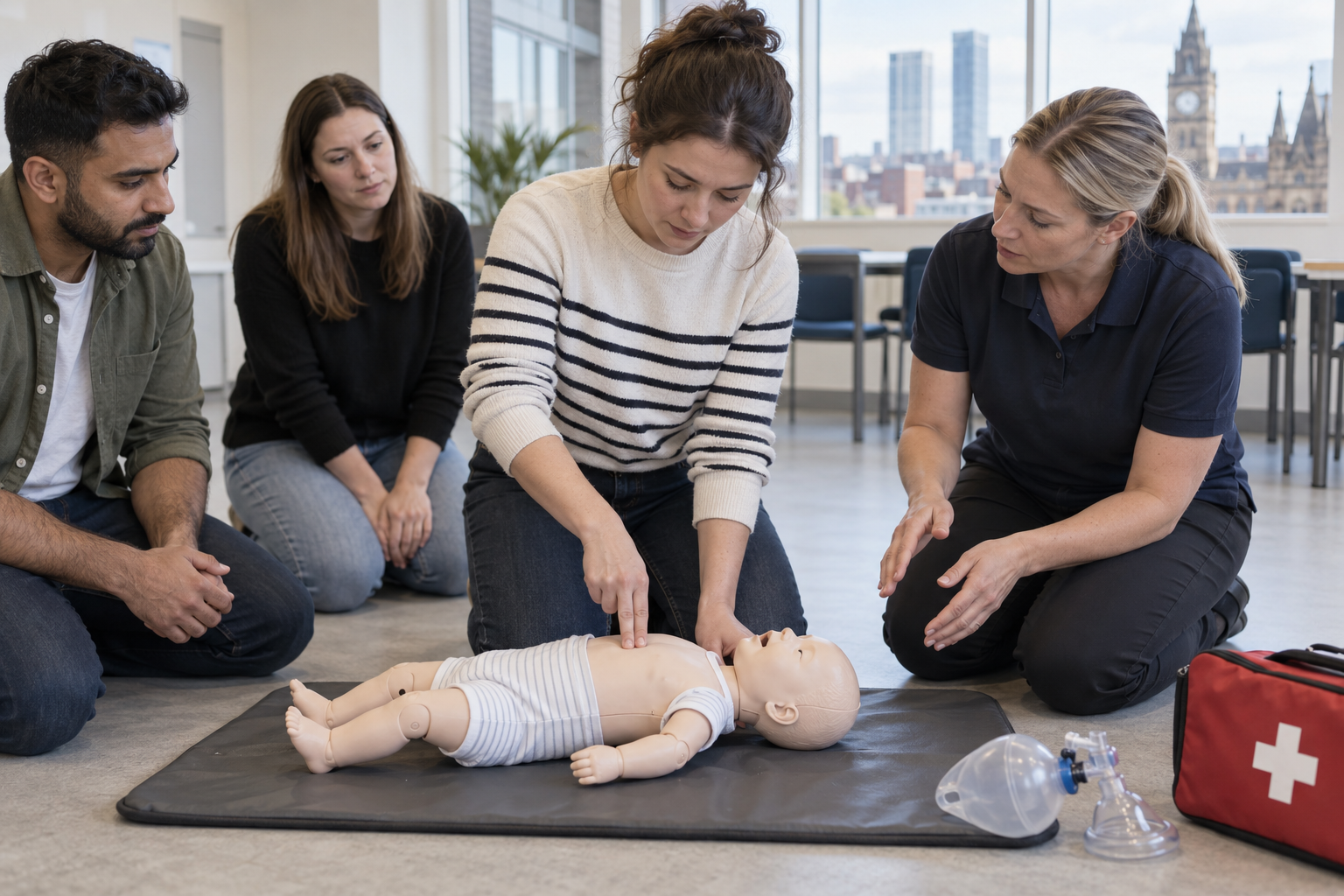
Level 3 Paediatric First Aid (PFA) Course in Manchester
Our paediatric first aid course in Manchester leads to the Qualsafe Level 3 Award in Paediatric First Aid (RQF), a full two-day qualification designed to meet the Early Years…
Mon 23 Nov, PLAB Guide Training Centre
12 places available
See all Mandatory Training courses
Frequently asked questions
Does this course meet the Benedict's Law staff training requirement?
Is my paediatric first aid or first aid at work certificate enough?
How long is the allergy and anaphylaxis certificate valid?
Is there a practical assessment?
Do I need a medical or first aid background to attend?
Is allergy training only for designated first aiders?
Can you train all our staff at our own school?
Who awards the qualification?
Ready to book?
The next date with places is Saturday 17 October 2026
Book now