
Immediate & Basic Life Support
Full-Day Immediate Life Support (ILS) Course in Manchester
Our full-day ILS course in Manchester gives healthcare professionals the practical skills to recognise the deteriorating adult patient, start high-quality CPR, defibrillate safely and work within a resuscitation team. Delivered face to face at PLAB Guide Training Centre, a Resuscitation Council UK approved centre in Levenshulme, the course suits doctors, nurses, paramedics and allied health professionals. Candidates who meet the course standard receive the Resuscitation Council UK ILS Provider certificate.
- Small-group, hands-on practical teaching
- Realistic adult cardiac arrest simulations
- Pre-course learning materials sent before you attend
- Modern resuscitation and defibrillation equipment
- Structured instructor feedback throughout the day
- Free dedicated car parking
- Free on-road parking nearby
- Easy to reach by road and public transport
Course summary
- Qualification
- Resuscitation Council UK Immediate Life Support (ILS) Provider
- Duration
- 1 day
- Format
- Face-to-face
- Location
- Manchester
- Certificate valid for
- 1 year
- Price
- £185
- Next date
- Monday 9 November 2026
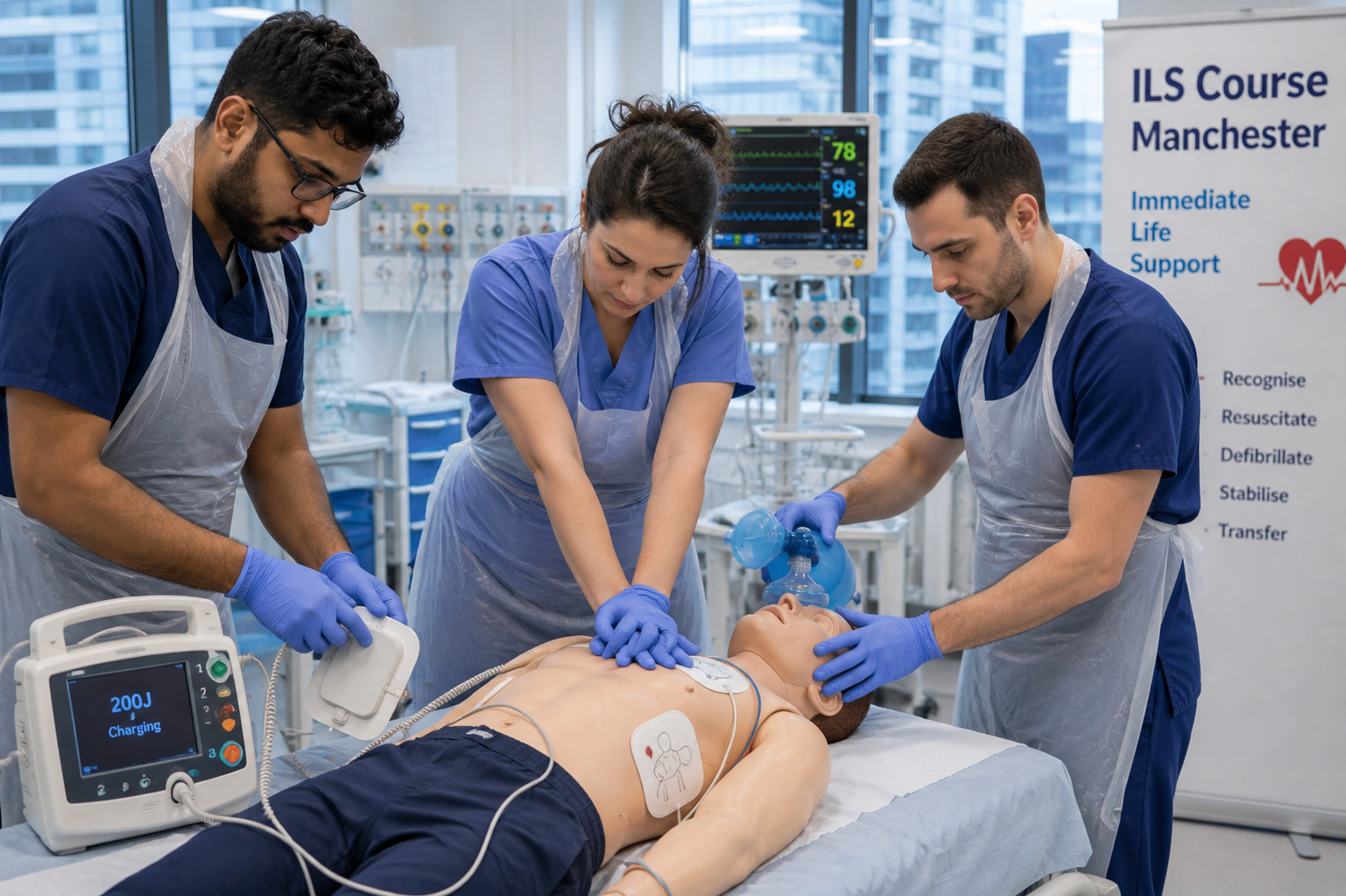
Hands-on ILS training in Manchester
When a patient deteriorates or goes into cardiac arrest, what happens in the first few minutes matters. Our ILS course in Manchester prepares you to act in that window: to spot warning signs early, start effective treatment and play your part confidently in the resuscitation team until senior help arrives.
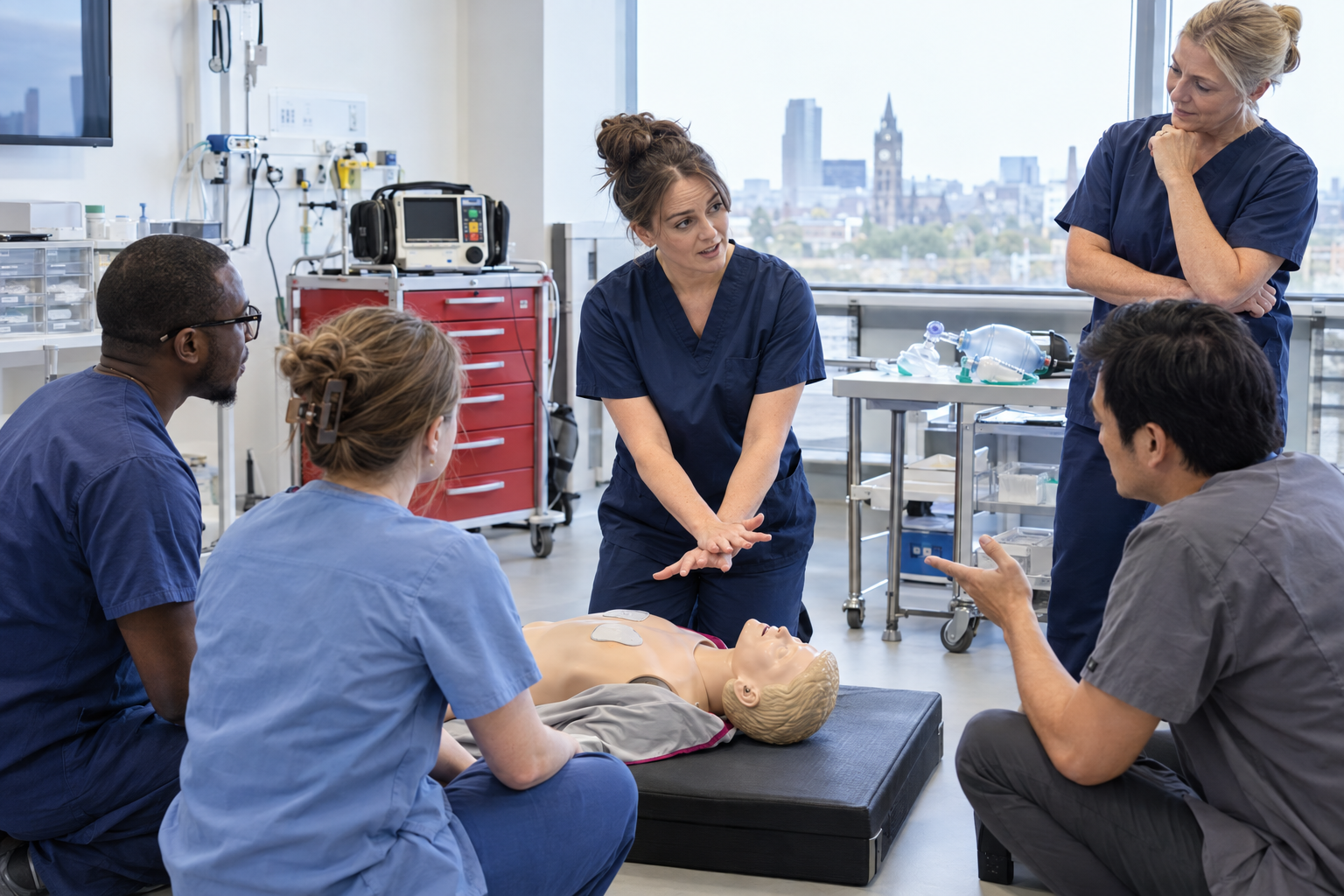
This is the full-day, face-to-face version of the Resuscitation Council UK Immediate Life Support course, taught at our centre in Levenshulme, South Manchester. You will spend most of the day on your feet, working through ABCDE assessments, airway skills, CPR, defibrillation and simulated cardiac arrests in small groups, rather than sitting through lectures.
Choose a date below to reserve your place. Booking early gives you time to work through the pre-course materials before you attend.
Why train with PLAB Guide in Manchester
PLAB Guide Training Centre is a Resuscitation Council UK approved centre. We don't just drill the algorithm: our instructors explain the clinical reasoning behind each step, so you can think clearly when a real emergency doesn't go to plan.
- Small groups, so you get plenty of hands-on time with manikins and defibrillators.
- Realistic scenarios that build from a deteriorating patient to a full cardiac arrest.
- Structured feedback from experienced, supportive instructors throughout the day.
- Modern equipment in a professional, welcoming training environment.
- Easy to reach, with free dedicated car parking and free on-road parking nearby.
Further reading
- ILS or eILS: which Immediate Life Support course should you book?: How the full-day and blended routes compare on format, time and price.
Upcoming dates
£185
Book this dateMore dates
Choosing a date takes you straight to booking with that date selected.
Course overview
The course follows the Resuscitation Council UK ILS programme and is built around a simple principle: recognise and treat problems early, and if cardiac arrest does happen, respond in a structured, team-based way.
The day mixes short, interactive teaching sessions with practical skills stations. You will:
- practise the ABCDE assessment and escalation of the deteriorating adult patient
- work on airway opening, simple adjuncts, bag-mask ventilation and oxygen delivery
- rehearse high-quality chest compressions, correct pad placement and safe defibrillation
- learn to identify shockable and non-shockable rhythms and follow the adult algorithm
- consider the 4 Hs and 4 Ts alongside ongoing resuscitation
These skills are then brought together in simulated scenarios, from respiratory and circulatory deterioration through to cardiac arrest, where you take on different roles within the team. Instructors give feedback after each scenario so you can see what went well and what to sharpen.
Assessment is continuous, so expect an active day with plenty of participation rather than classroom teaching alone.
Who this course is for
ILS is designed for healthcare professionals who may be first on the scene when an adult patient becomes acutely unwell or arrests, whether in hospital, a clinic, or a community or independent setting. It gives you a clear, repeatable approach to assessment and immediate treatment, and the confidence to start resuscitation and support the team leader until more experienced help takes over.
It is also a practical choice if you are returning to clinical practice, or if you are an international medical graduate working, or preparing to work, in the UK and want hands-on experience of UK resuscitation practice.
Who should attend
- Doctors, including foundation and specialty trainees
- Nurses and nursing associates
- Paramedics
- Operating department practitioners
- Physician associates
- Advanced clinical practitioners
- Dentists and dental professionals, where relevant
- Allied health professionals in acute, community or independent settings
- Clinicians returning to practice
- International medical graduates working or preparing to work in the UK
Entry requirements
You will receive course information and learning materials before your course date. To get the most from the day, please:
- read the course materials provided
- review the adult resuscitation algorithm
- refresh your basic life support knowledge
- familiarise yourself with the ABCDE approach
- complete any required pre-course learning
Come ready to take a full, active part in the practical sessions.
What you will learn
- Recognise the deteriorating adult patient using a structured ABCDE assessment
- Identify and treat immediately life-threatening problems and escalate appropriately
- Recognise cardiorespiratory arrest and deliver high-quality CPR with minimal interruptions
- Maintain the airway and provide effective ventilation using simple adjuncts and a bag-mask
- Use an automated or manual defibrillator safely
- Distinguish shockable from non-shockable rhythms and apply the adult resuscitation algorithm
- Consider and address reversible causes of cardiac arrest
- Communicate clearly as a resuscitation team member and give a structured handover
Course content
-
1 Recognising the deteriorating patient
A structured ABCDE approach to the acutely unwell adult, focusing on spotting deterioration before cardiac arrest occurs and knowing when and how to call for help. -
2 Airway management and ventilation
Practical airway skills to keep the patient oxygenated until more experienced help arrives, including basic manoeuvres, simple adjuncts, bag-mask ventilation and oxygen delivery. -
3 CPR and defibrillation
Repeated hands-on practice of chest compressions, ventilation and defibrillator use, with an emphasis on minimising pauses and returning to CPR straight after each shock. -
4 Cardiac arrest rhythms and the adult algorithm
Recognition of ventricular fibrillation, pulseless ventricular tachycardia, pulseless electrical activity and asystole, and how each fits into the adult resuscitation algorithm. -
5 Reversible causes of cardiac arrest
A review of the 4 Hs and 4 Ts and how looking for reversible pathology should shape assessment and treatment while resuscitation continues. -
6 Teamwork, communication and handover
The non-technical skills that make resuscitation work: clear role allocation, closed-loop communication, situational awareness and speaking up when concerned. -
7 Simulated clinical scenarios
Realistic scenarios covering respiratory and circulatory deterioration through to cardiac arrest, bringing every skill from the day together, followed by constructive instructor feedback.
Course format
- Duration
- 1 day
- Delivery
- Interactive teaching, practical skills stations and cardiac arrest simulations
- Classroom
- 09:00 – 17:00
Assessment
- How you are assessed
- Continuous assessment throughout the day, covering your practical skills, your management of clinical scenarios, and your teamwork and communication.
- Practical assessment
- Airway and resuscitation skills, plus your management of simulated deteriorating-patient and cardiac arrest scenarios.
Certification
- Requirements
- Demonstrate a safe and effective structured approach to the deteriorating patient and to cardiac arrest, meeting the Resuscitation Council UK course standard. Attendance alone does not guarantee successful completion.
- Certificate valid for
- 1 year
Training near you
PLAB Guide Training Centre delivers Full-Day Immediate Life Support (ILS) Course in Manchester, convenient for learners travelling from Levenshulme, Longsight, Burnage, Gorton, Didsbury and surrounding areas.
Related courses
You may also like
-
 View course
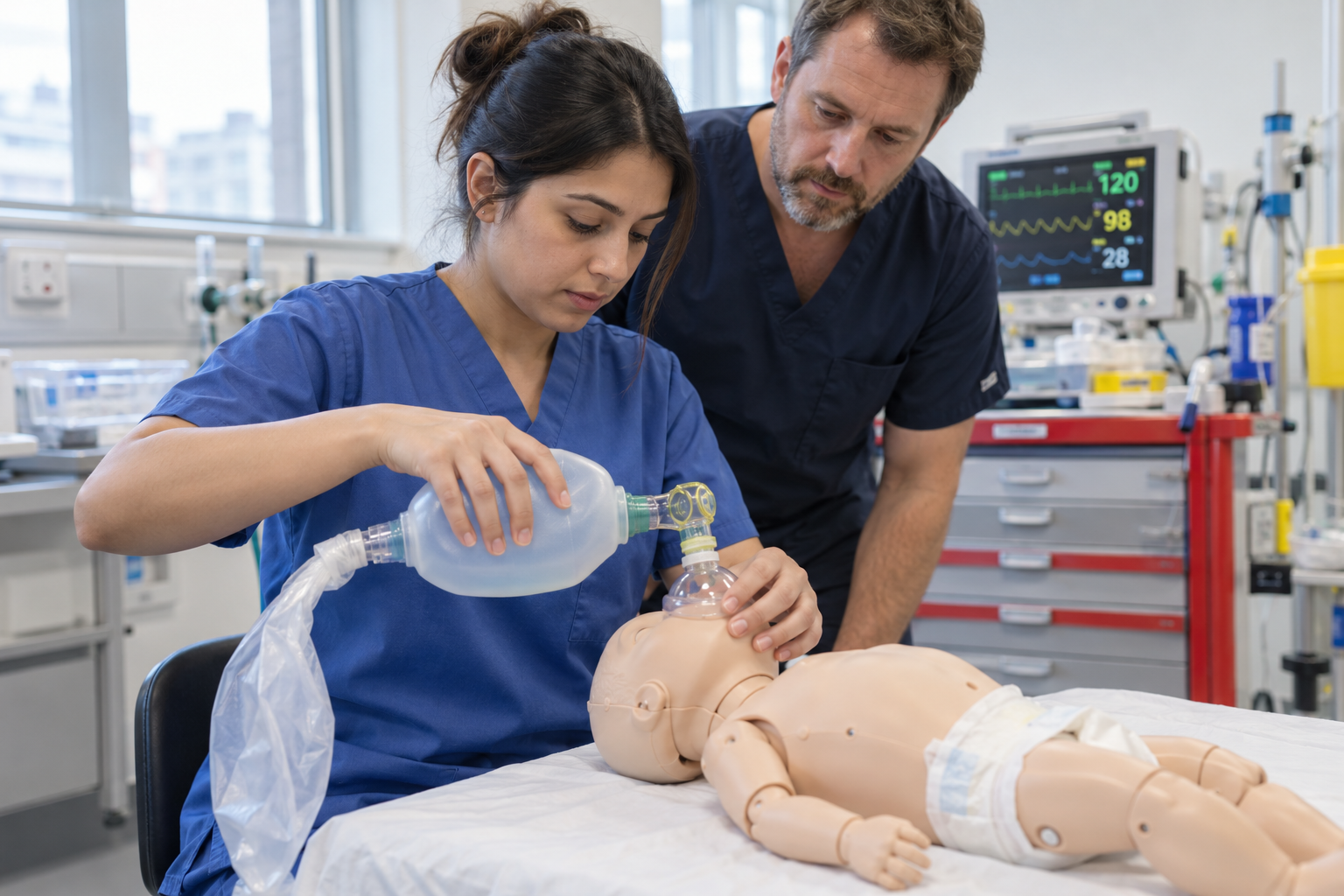
Paediatric Immediate Life Support (PILS) Course in Manchester
This PILS course in Manchester is the Resuscitation Council UK Paediatric Immediate Life Support course, delivered as ePILS: online learning in your own time, then a half-day…
Fri 6 Nov, PLAB Guide Training Centre
5 places available
-
 View course
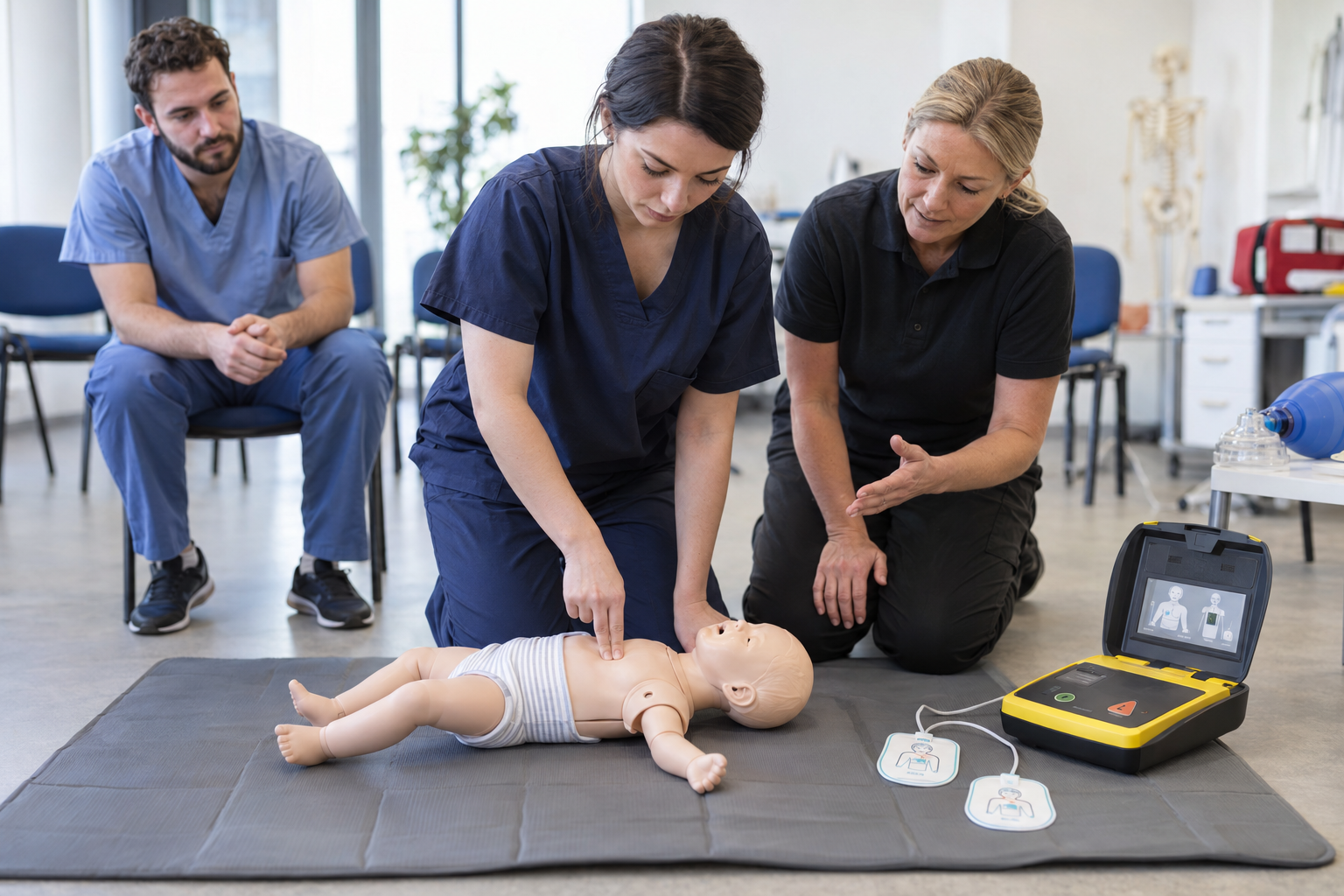
Basic Life Support (BLS) and AED Course in Manchester
Our BLS course in Manchester is a one-day, hands-on Qualsafe Level 3 Award in Basic Life Support and Automated External Defibrillation for Adults, Children and Infants (RQF). You…
Mon 16 Nov, PLAB Guide Training Centre
12 places available
Alternatives
-
 View course
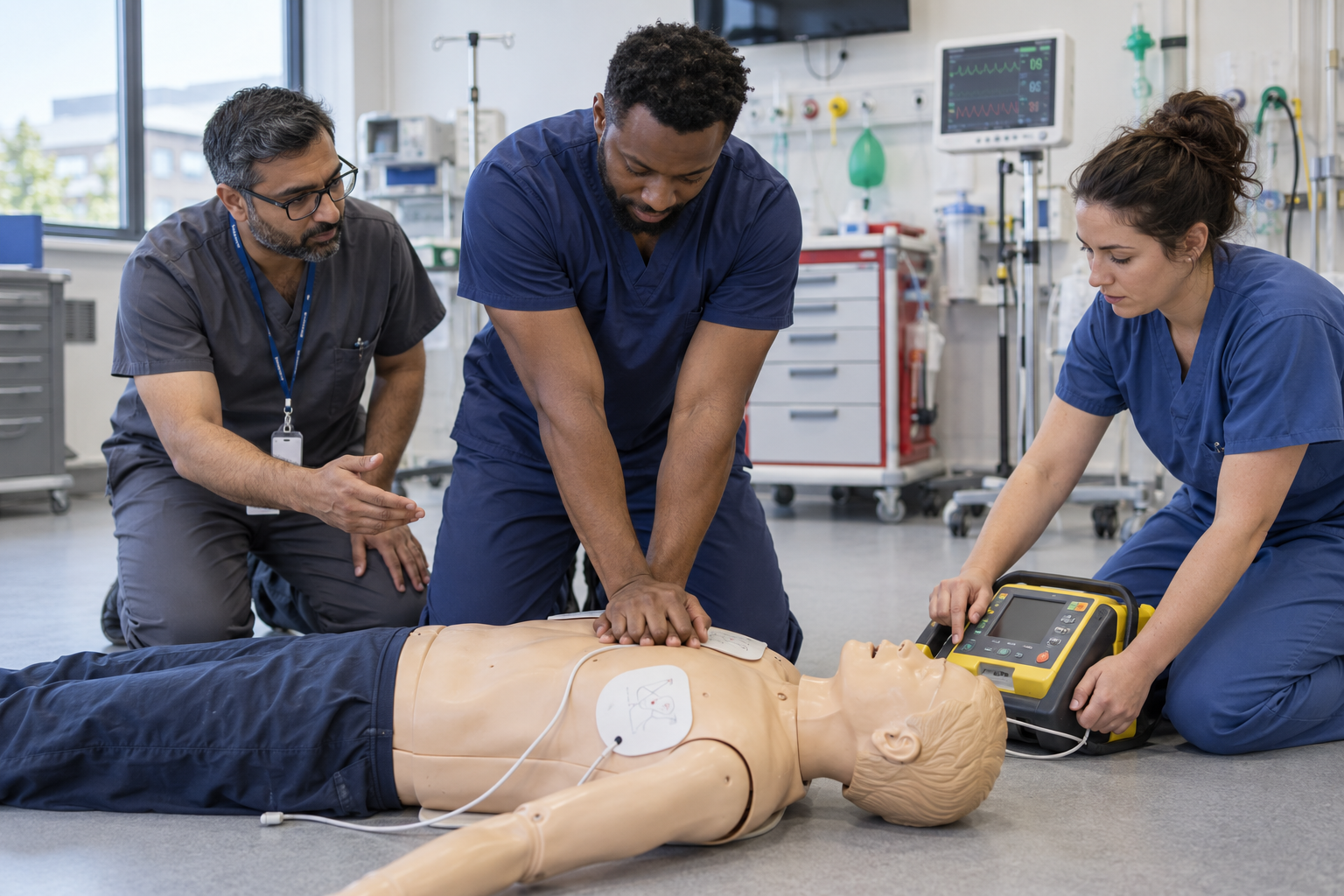
Blended Immediate Life Support (eILS) Course in Manchester
Our eILS course in Manchester is the blended version of the Resuscitation Council UK Immediate Life Support course: you complete the e-learning online, then attend a half-day…
Fri 4 Dec, PLAB Guide Training Centre
6 places available
Next steps
-
 View course
Immediate Life Support Instructor (ILSi) Course in Manchester
Our ILS instructor course in Manchester (ILSi) is a one-day Resuscitation Council UK programme for healthcare professionals identified as having Instructor Potential on an…
Fri 6 Nov, PLAB Guide Training Centre
6 places available
See all Immediate & Basic Life Support courses
Frequently asked questions
Who is the ILS course suitable for?
Is this ILS course accredited by the Resuscitation Council UK?
Is this the face-to-face or the blended ILS course?
How should I prepare for the ILS course?
How will I be assessed on the ILS course?
How much does the ILS course cost?
Is there parking at the training centre?
How practical is the ILS course?
Ready to book?
The next date with places is Monday 9 November 2026
Book now