Immediate & Basic Life Support
Paediatric Immediate Life Support (PILS) Course in Manchester
This PILS course in Manchester is the Resuscitation Council UK Paediatric Immediate Life Support course, delivered as ePILS: online learning in your own time, then a half-day practical session at our Levenshulme centre. It is designed for doctors, nurses, paramedics and other healthcare professionals who may need to recognise a deteriorating infant or child and manage a paediatric arrest until expert help arrives. Successful candidates receive the RCUK PILS Provider certificate.
- E-learning on the RCUK platform, done in your own time
- Morning practical session, starting at 9am
- Small-group, hands-on teaching
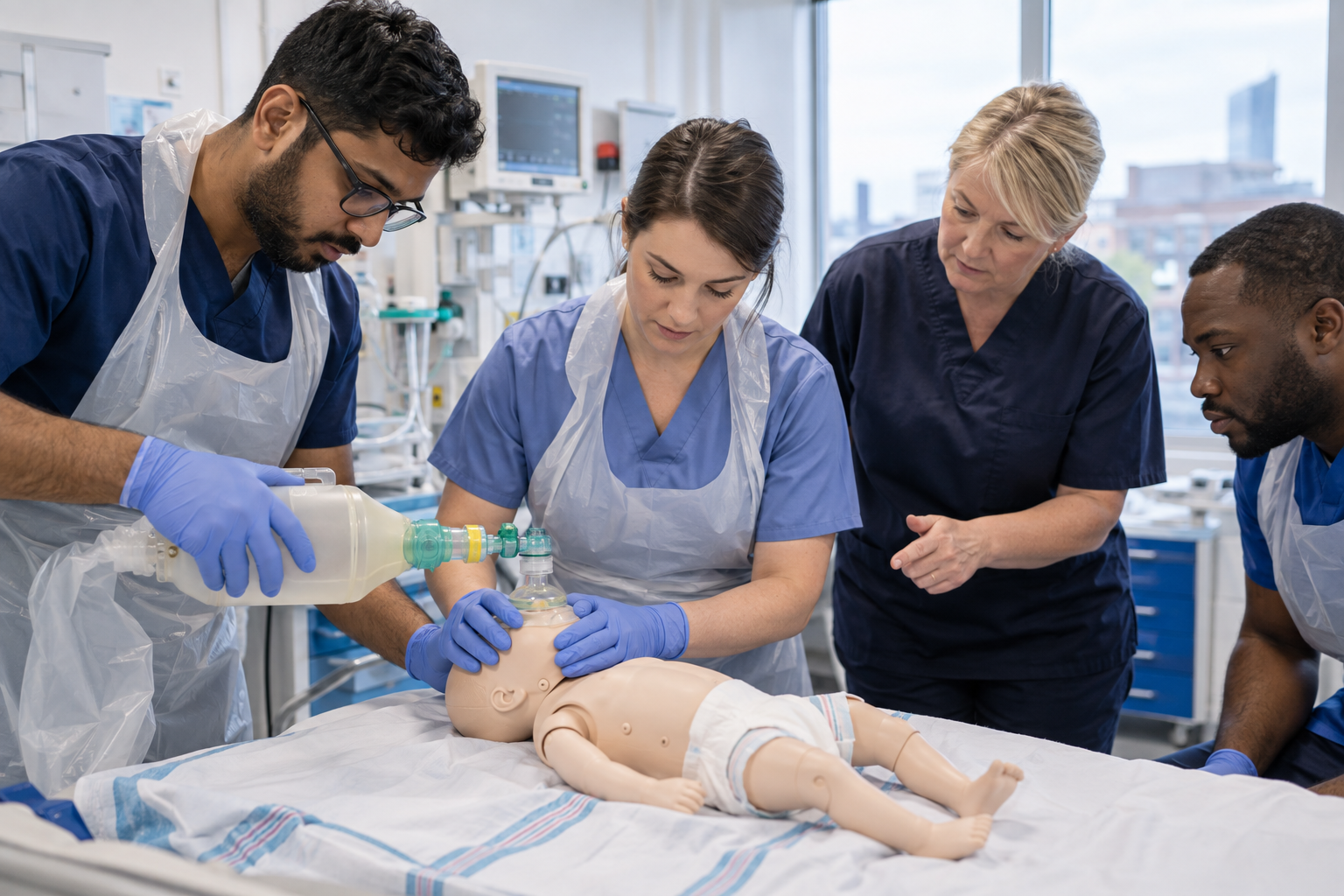
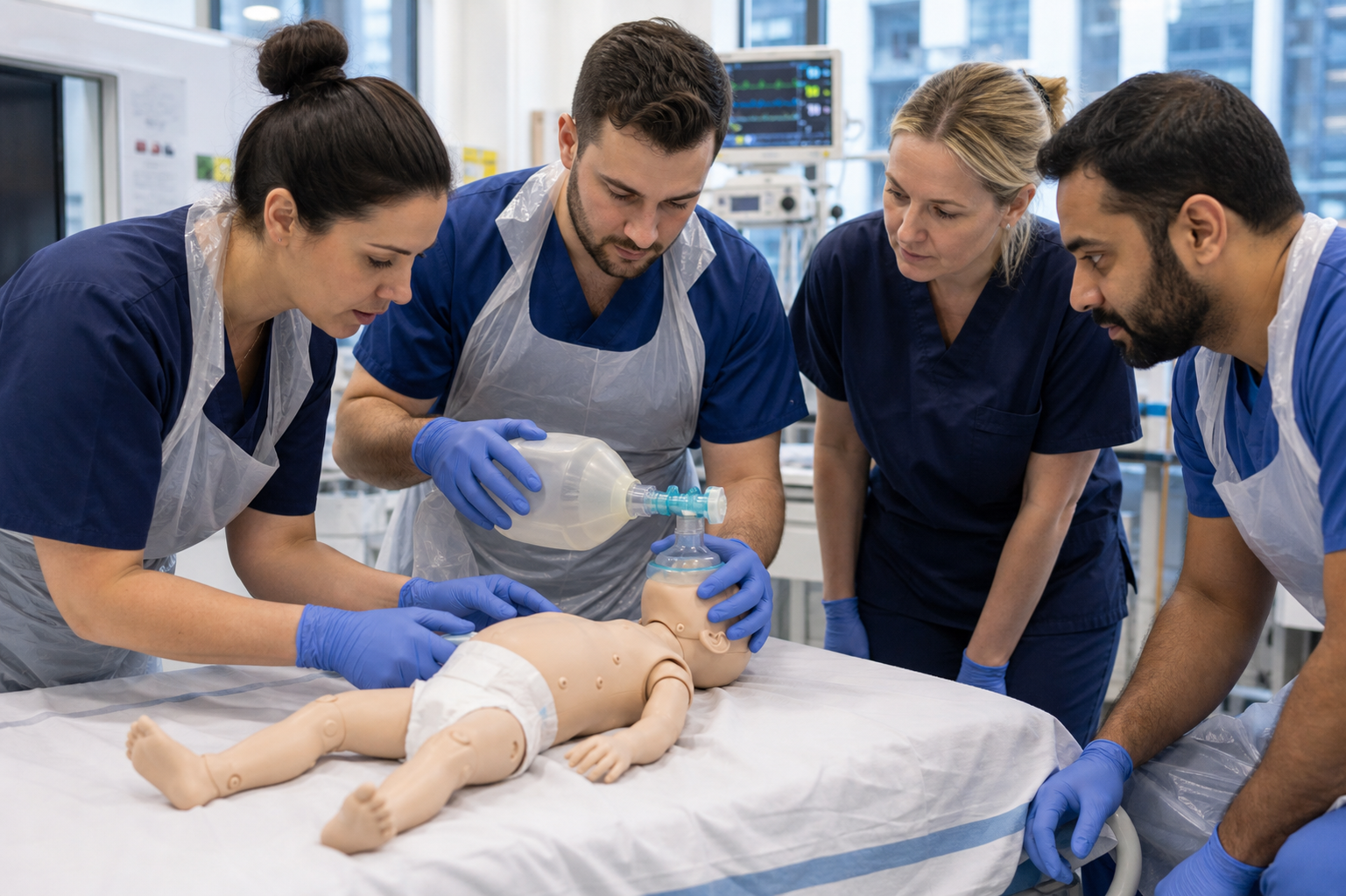
- Realistic infant and child emergency simulations
- Continuous practical assessment on the day
- Course manual: collect in Manchester or have it posted
- Free dedicated parking
- Group booking plan for six candidates
Course summary
- Qualification
- Resuscitation Council UK PILS Provider certificate
- Duration
- Online learning + half-day practical session
- Format
- 1 day online learning + 1 day face-to-face practical training
- Location
- Manchester
- CPD
- 5
- Certificate valid for
- 1 year
- Price
- £150
- Next date
- Friday 6 November 2026
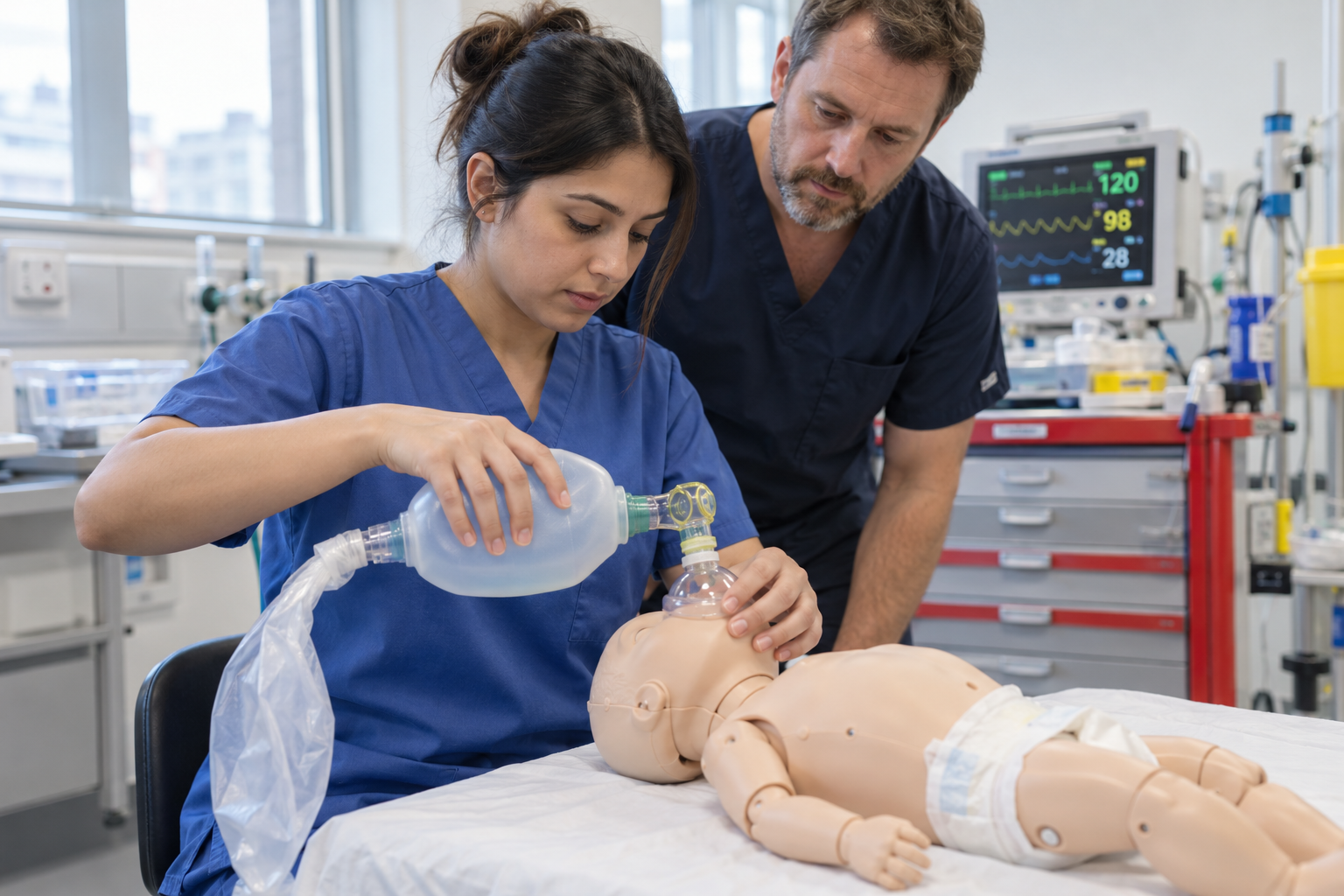
Paediatric life support training in Manchester for healthcare professionals
When a child starts to deteriorate, the first few minutes matter. Our PILS course in Manchester gives you a structured way to assess a sick infant or child, treat what you find and act decisively if breathing or circulation fails.
We run PILS in the ePILS blended format approved by Resuscitation Council UK. You work through the theory online first, at your own pace, and then join a small group at our Levenshulme centre for a focused morning of hands-on skills and simulated emergencies. Because the knowledge is already in place, the practical session can concentrate on what you do with your hands and your team.
Choose a date below, and book early so you have time to complete the e-learning.
Why train with PLAB Guide in Manchester
PLAB Guide Training Centre is a Resuscitation Council UK Approved Centre, so your ePILS leads to exactly the same RCUK PILS Provider certificate as the full-day course.
- Small groups: plenty of time on the manikins and structured feedback from your instructors.
- Realistic paediatric simulation: scenarios built around common infant and child emergencies.
- Modern resuscitation equipment at every skill station.
- Easy to reach: free dedicated parking, and good links by train, bus and road from across Greater Manchester.
Further reading
- What to expect on an APLS course in Manchester: Eligibility, online learning, the two face-to-face days and how to prepare.
- ILS or eILS: which Immediate Life Support course should you book?: How the full-day and blended routes compare on format, time and price.
Upcoming dates
From £150
Book this dateMore dates
Show 7 more dates
Choosing a date takes you straight to booking with that date selected.
Course overview
The Resuscitation Council UK PILS course teaches the knowledge and skills needed to recognise and treat a seriously ill or injured infant or child, and to manage respiratory or cardiorespiratory arrest until a specialist team or more experienced help arrives. It sits between paediatric basic life support and the more comprehensive two-day EPALS course.
On the ePILS route the course runs in two parts:
- Online learning. After enrolment you receive access to the e-learning on the Resuscitation Council UK learning management system. Resuscitation Council UK describes this as around half a day of study. It must be completed, together with any pre-course assessment, before the practical session.
- Half-day practical session. A morning at our Manchester centre covering paediatric resuscitation skills, airway and ventilation, recognition of the deteriorating child, teamwork and communication, and cardiorespiratory arrest simulations. Assessment runs continuously throughout.
Both parts together lead to the same RCUK PILS Provider certificate as the traditional full-day, face-to-face PILS course.
Who this course is for
PILS is for healthcare professionals who may be first on scene when a baby or child becomes unwell, and who need more than basic life support but not the depth of EPALS. You leave with a systematic ABCDE approach you can use on any shift, practical confidence with airway and ventilation, and a clear sense of your role in a paediatric resuscitation team.
The blended format suits clinicians who find it hard to take a full day away from work or family. The theory fits around your schedule, and the practical takes a single morning.
Who should attend
- Doctors
- Nurses and nursing associates
- Paramedics and ambulance clinicians
- Operating department practitioners
- Health visitors and school nurses
- Midwives
- Resuscitation officers
- Physiotherapists
- Dental professionals
- Healthcare assistants and allied healthcare professionals
- Eligible final-year medical and nursing students
Entry requirements
The course is intended for healthcare professionals whose role involves caring for infants or children. Eligible final-year medical and nursing students may also attend. Please check that the course suits your role, experience and professional requirements before booking.
Before the practical session
- Log in to the Resuscitation Council UK learning platform promptly after enrolment and check that your access works.
- Complete all online modules and any required pre-course assessment. Don't leave this until the day before.
- Read the course manual and any pre-course materials.
- Tell us straight away if you have any problem accessing the e-learning.
Candidates who have not completed the e-learning may be refused admission, transferred to another date or found ineligible for assessment. Please book using your full name exactly as it appears on the identification you bring on the day.
What you will learn
- Recognise a seriously ill or deteriorating infant or child
- Assess a sick child using a structured paediatric ABCDE approach
- Identify likely causes of deterioration and start appropriate immediate treatment
- Recognise respiratory and cardiorespiratory arrest
- Deliver effective paediatric basic life support
- Provide bag-mask ventilation for infants and children
- Use paediatric emergency equipment safely
- Work and communicate effectively in a resuscitation team until expert help arrives
Course content
-
1 Online learning on the RCUK platform
The theory component of PILS, completed in your own time before the practical session. It must be finished, together with any pre-course assessment, before you attend. -
2 Recognising the deteriorating child
Putting the structured ABCDE assessment into practice with infants and children, with a focus on spotting early warning signs and identifying possible causes. -
3 Airway and ventilation skills
Hands-on airway and ventilation practice, including bag-mask ventilation, on infant and child manikins. -
4 Paediatric basic life support and emergency equipment
Effective compressions and ventilations for infants and children, and confident use of the emergency equipment you would reach for in a real event. -
5 Teamwork and communication
Working as part of a paediatric resuscitation team: clear roles, concise sharing of information and communication under time pressure. -
6 Cardiorespiratory arrest simulations
Realistic scenarios that bring every skill together, from recognising deterioration to managing an arrest until a resuscitation team arrives. Your performance is assessed continuously throughout.
Course format
- Duration
- Online learning + half-day practical session
- Made up of
- 1 day online learning + 1 day face-to-face practical training
- Delivery
- Online learning followed by small-group practical skills and simulation
- Online learning
- About half a day of RCUK e-learning
- Classroom
- 9:00am – 1:30pm
Assessment
- How you are assessed
- Continuous assessment during the practical session, covering skills stations, structured patient assessment and simulated paediatric emergencies.
- Practical assessment
- Observed throughout the skills stations and simulated infant and child emergencies.
Certification
- Requirements
- Complete all e-learning and any pre-course assessment, attend the whole practical session, take full part in every skills station and simulation, and meet the required assessment standard.
- Certificate valid for
- 1 year
Training near you
PLAB Guide Training Centre delivers Paediatric Immediate Life Support (PILS) Course in Manchester, convenient for learners travelling from Levenshulme, Longsight, Burnage, Gorton, Didsbury and surrounding areas.
Related courses
You may also like
-
 View course
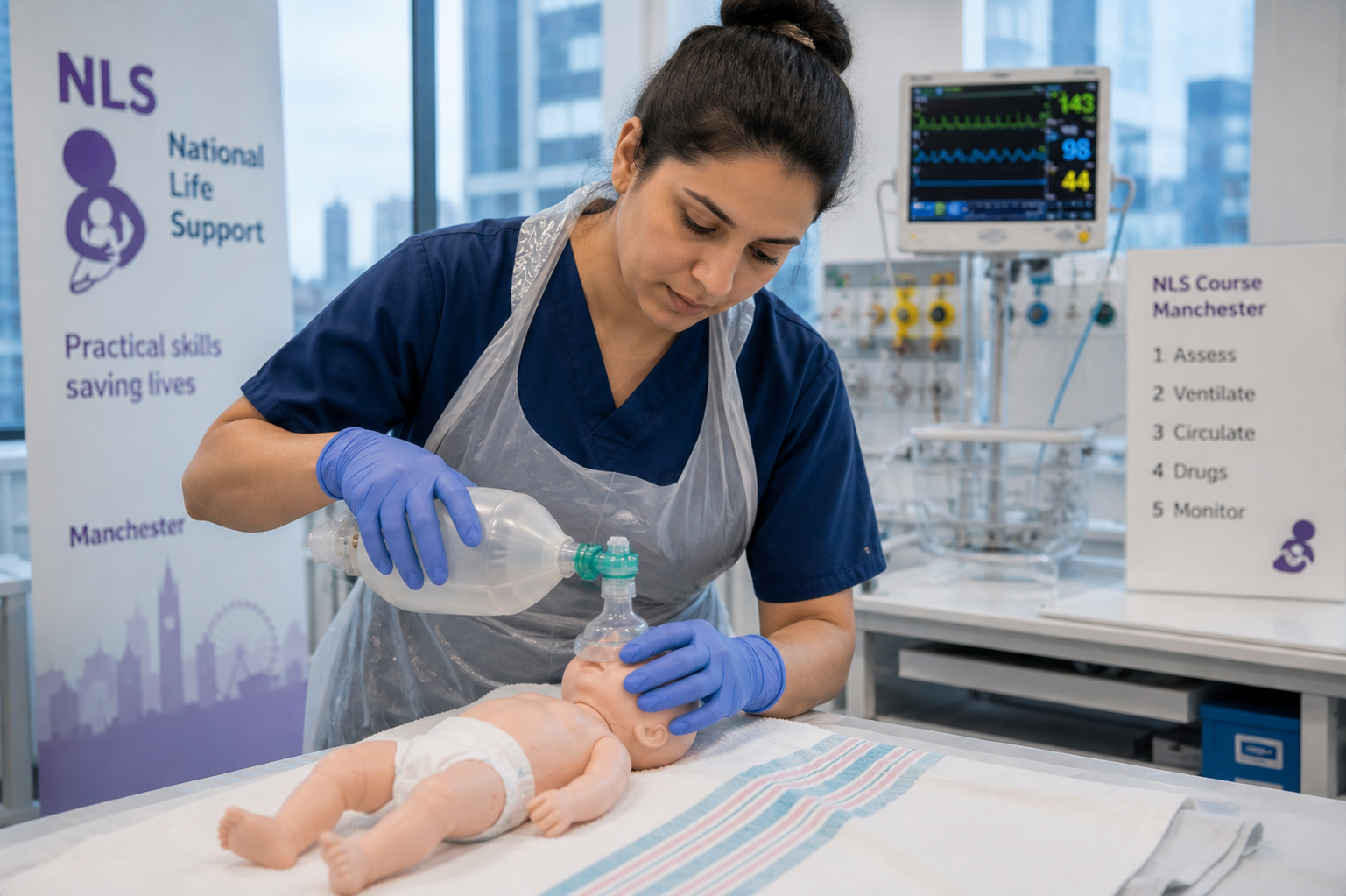
Newborn Life Support (NLS) Course in Manchester
The Newborn Life Support (NLS) course in Manchester is a one-day Resuscitation Council UK provider course for doctors, midwives, nurses and paramedics who care for babies at…
Fri 20 Nov, PLAB Guide Training Centre
Only 1 place left
-
 View course
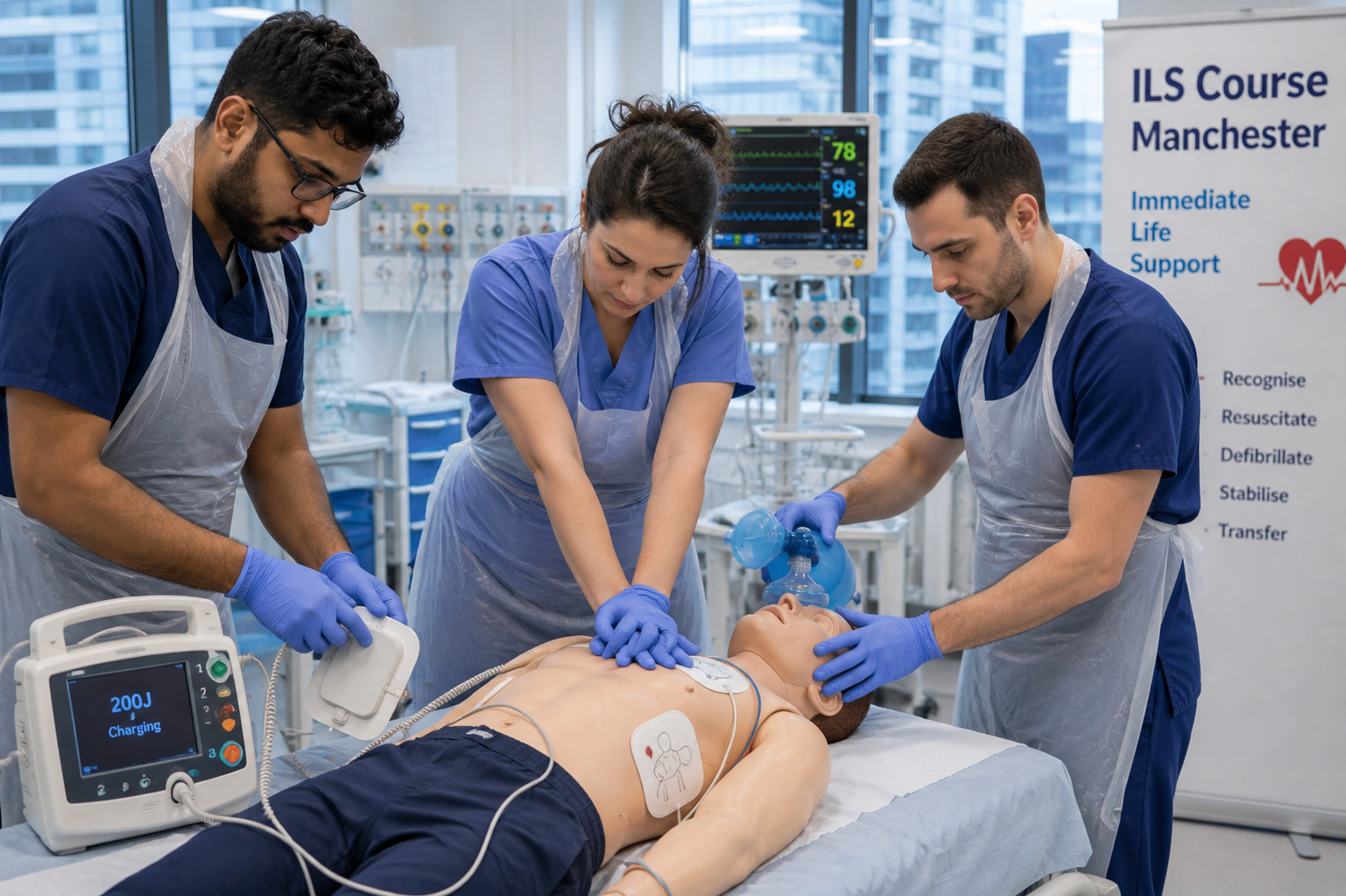
Full-Day Immediate Life Support (ILS) Course in Manchester
Our full-day ILS course in Manchester gives healthcare professionals the practical skills to recognise the deteriorating adult patient, start high-quality CPR, defibrillate…
Mon 9 Nov, PLAB Guide Training Centre
6 places available
Next steps
-
 View course
European Paediatric Advanced Life Support (EPALS) Course in Manchester
Our EPALS course in Manchester is the Resuscitation Council UK European Paediatric Advanced Life Support provider course, run over two days at PLAB Guide Training Centre in…
Sat 7 – Sun 8 Nov, PLAB Guide Training Centre
Fast selling, 6 places left
-
 View course
Advanced Paediatric Life Support (APLS) Course in Manchester
Our APLS course in Manchester is the ALSG Advanced Paediatric Life Support programme (7th Edition), delivered at an approved APLS centre in Levenshulme. It is built for doctors…
Sat 21 – Sun 22 Nov, PLAB Guide Training Centre
16 places available
See all Immediate & Basic Life Support courses
Frequently asked questions
What is the difference between PILS and ePILS?
How long is the PILS certificate valid?
How much does the ePILS course cost?
How long does the ePILS e-learning take, and when should I do it?
What happens if I have not finished the e-learning before my session?
Should I book PILS or EPALS?
How is the course assessed?
Can students attend the PILS course?
Is there parking at the training centre?
Ready to book?
The next date with places is Friday 6 November 2026
Book now