Advanced & Specialist Life Support
Advanced Paediatric Life Support (APLS) Course in Manchester
Our APLS course in Manchester is the ALSG Advanced Paediatric Life Support programme (7th Edition), delivered at an approved APLS centre in Levenshulme. It is built for doctors, nurses and other clinicians who assess and treat seriously ill or injured children. You complete flexible online learning on the ALSG VLE, then two intensive face-to-face days of skills stations, workshops and simulation. Successful candidates receive ALSG APLS certification.
- APLS 7th Edition, developed by ALSG
- Flexible online learning on the ALSG VLE
- Skills stations, workshops and paediatric simulation
- Small-group teaching with experienced faculty
- APLS manual posted to you or collected in Manchester
- Pay in full, pay a deposit, or let your employer pay
- Free dedicated car parking at the centre
- RCPCH-approved CPD for the face-to-face days
Course summary
- Duration
- About 1 day online + 2 days face-to-face
- Format
- 1 day online learning + 2 days face-to-face practical training
- Location
- Manchester
- CPD
- 10
- Certificate valid for
- 4 years
- Price
- £750
- Next date
- Saturday 21 – Sunday 22 November 2026
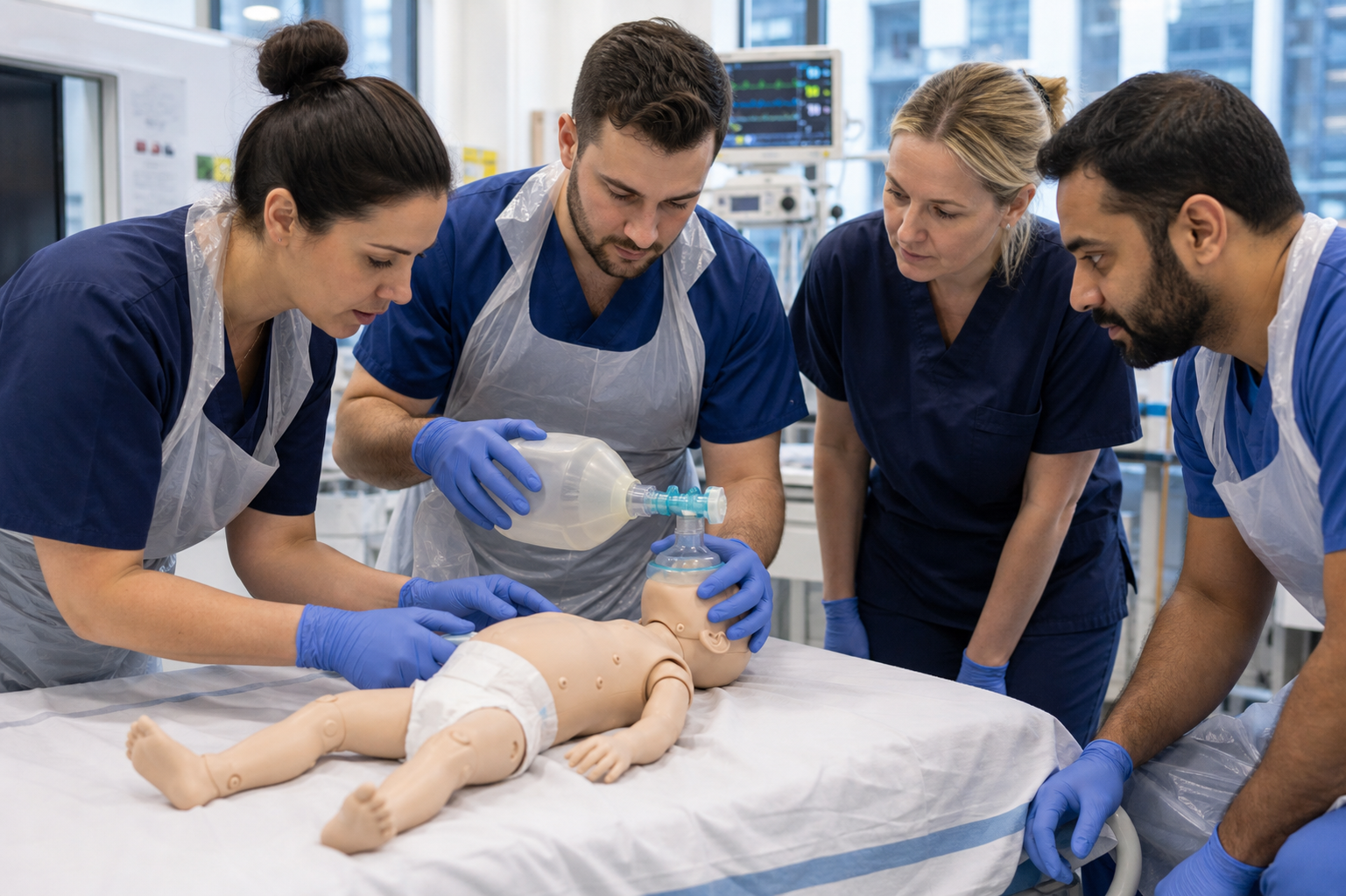
APLS training in Manchester for clinicians who treat sick children
When a child deteriorates, the first critical period of care decides a great deal, and the clinician with a reliable system is the one who stays in control. Our APLS course in Manchester gives you that system: the Advanced Life Support Group's structured approach to recognising, treating and stabilising infants and children with life-threatening illness or injury.
PLAB Guide Training Centre is an ALSG approved APLS centre, and the face-to-face course is approved for CPD by the Royal College of Paediatrics and Child Health. You work through the theory online, then spend two practical days with our faculty applying it in realistic paediatric scenarios.
Places are limited and the preparation takes time, so choose a date below and book early.
Why train for APLS with PLAB Guide in Manchester
We teach APLS in small groups, so you get hands-on time at every skills station and take an active role in the simulations rather than watching from the back of the room. Our faculty bring paediatric emergency and resuscitation experience to each scenario and give you feedback throughout both days.
- Realistic practice: paediatric emergency scenarios run with modern resuscitation equipment.
- Easy to reach: free dedicated car parking at our Levenshulme centre, free on-road parking nearby and good public transport links.
- Flexible payment: pay in full, pay a deposit now and the balance later, or send the payment link to your employer.
- Your manual, your choice: have the APLS 7th Edition manual posted to you or collect it from our Manchester office.
Further reading
- What to expect on an APLS course in Manchester: Eligibility, online learning, the two face-to-face days and how to prepare.
Upcoming dates
£750
Book this dateMore dates
Choosing a date takes you straight to booking with that date selected.
Course overview
APLS 7th Edition is a blended course. It begins with flexible online learning on the ALSG Virtual Learning Environment, equivalent to about one day of study, which covers the core theory. You complete it as instructed before or alongside the classroom days. That frees the two face-to-face days at our Levenshulme centre for practice.
Everything you do follows one sequence: rapid assessment, recognition of life-threatening problems, immediate treatment, reassessment, and escalation to definitive care. The aim is to deal with immediate threats first rather than chase the final diagnosis. That habit keeps you organised when a child is getting worse quickly.
The days combine skills stations, workshops, interactive teaching and scenario-based simulation, with team exercises that build leadership and communication. The content covers both the seriously ill and the seriously injured child: airway and breathing emergencies, shock, cardiorespiratory arrest, neurological emergencies and trauma. The anatomical and physiological differences between children and adults are reinforced at every stage. Faculty observe and give feedback throughout, and formal assessment is built into the programme.
Who this course is for
APLS is for healthcare professionals who may be the first to assess and treat a seriously ill or injured child, whether in the emergency department, on a paediatric ward, in theatre or in intensive care. The course gives you a dependable approach you can fall back on under pressure. You also gain a respected credential that strengthens your acute-care portfolio, whether you are preparing for work in emergency medicine or paediatrics or keeping established paediatric emergency skills structured and current.
Who should attend
- Emergency medicine doctors
- Paediatricians
- Anaesthetists
- Intensive care clinicians
- Acute care doctors and consultants
- Specialty trainees
- Advanced nurse practitioners
- Resuscitation training officers
- Other eligible healthcare professionals regularly involved in acute paediatric care
Entry requirements
You must meet ALSG's current eligibility requirements for the APLS provider course before you book. When you book, we ask for your professional body (for example GMC, NMC or HCPC) and your registration number.
Before the course
- Complete the online learning on the ALSG VLE as instructed
- Read the Advanced Paediatric Life Support 7th Edition manual
- Refresh your paediatric resuscitation knowledge
- Complete any required pre-course assessments
Book early enough to finish this preparation. Candidates who book close to the course date must still complete all mandatory preparation before they attend.
What you will learn
- Recognise the seriously ill or injured child early using a structured assessment
- Prioritise and treat immediately life-threatening problems before seeking a diagnosis
- Manage paediatric airway and respiratory emergencies and escalate airway support
- Recognise compensated and decompensated shock and start immediate treatment
- Deliver high-quality paediatric CPR, rhythm recognition and defibrillation
- Lead and support a team through a paediatric cardiorespiratory arrest
- Assess and stabilise a seriously injured child, including head and spinal injury
- Reassess, escalate and stabilise children safely before definitive care or transfer
Course content
-
1 Online learning on the ALSG VLE
Flexible, self-paced study of the core APLS theory, completed before or alongside the face-to-face days so classroom time can focus on practice.By the end of this part you will be able to:
- Explain the APLS structured approach before arriving
- Arrive ready to apply theory in skills stations and scenario
-
2 The structured approach to the sick child
The APLS sequence of rapid assessment, recognition, immediate treatment, reassessment and escalation, and how children differ anatomically and physiologically from adults. -
3 Airway and breathing emergencies
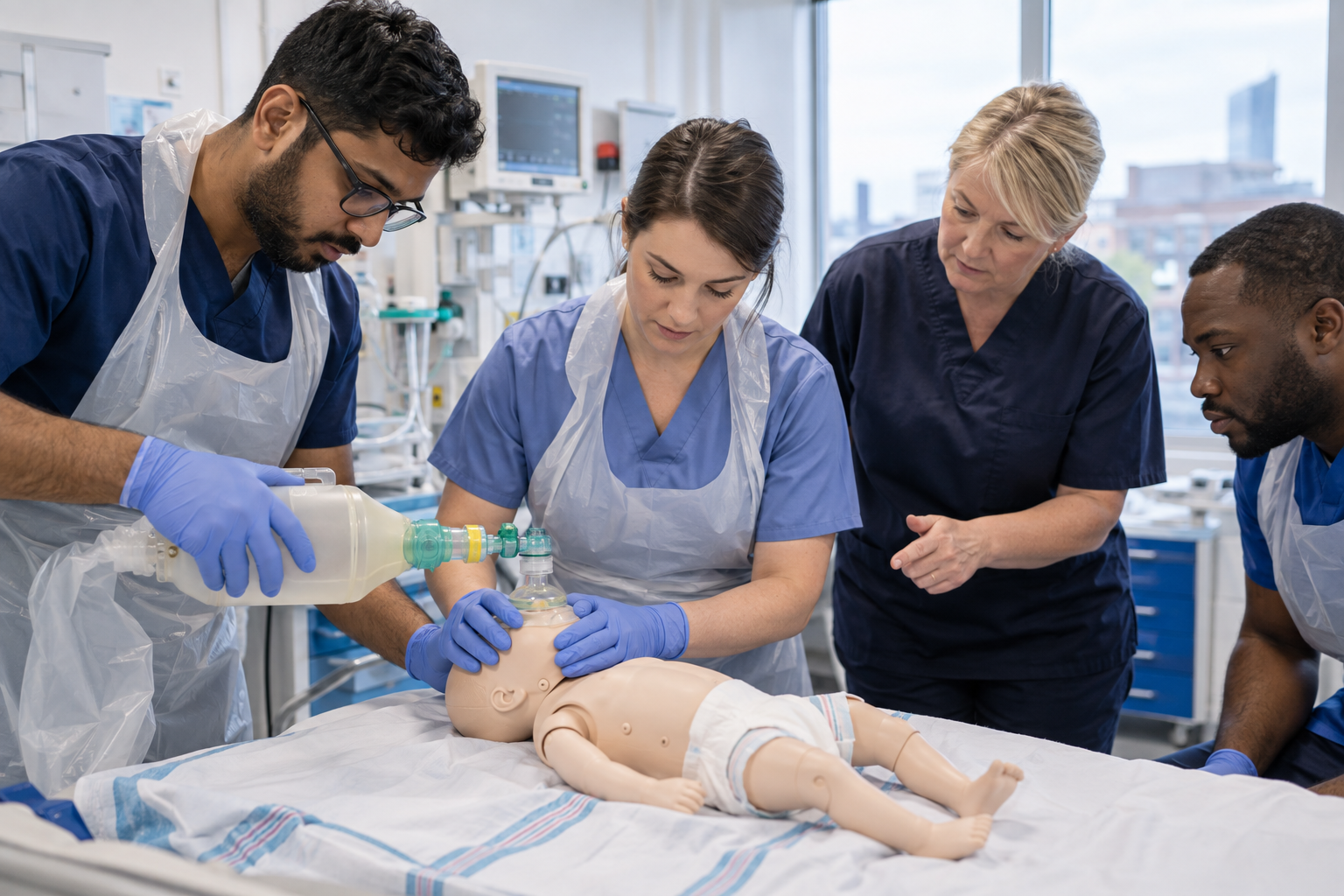
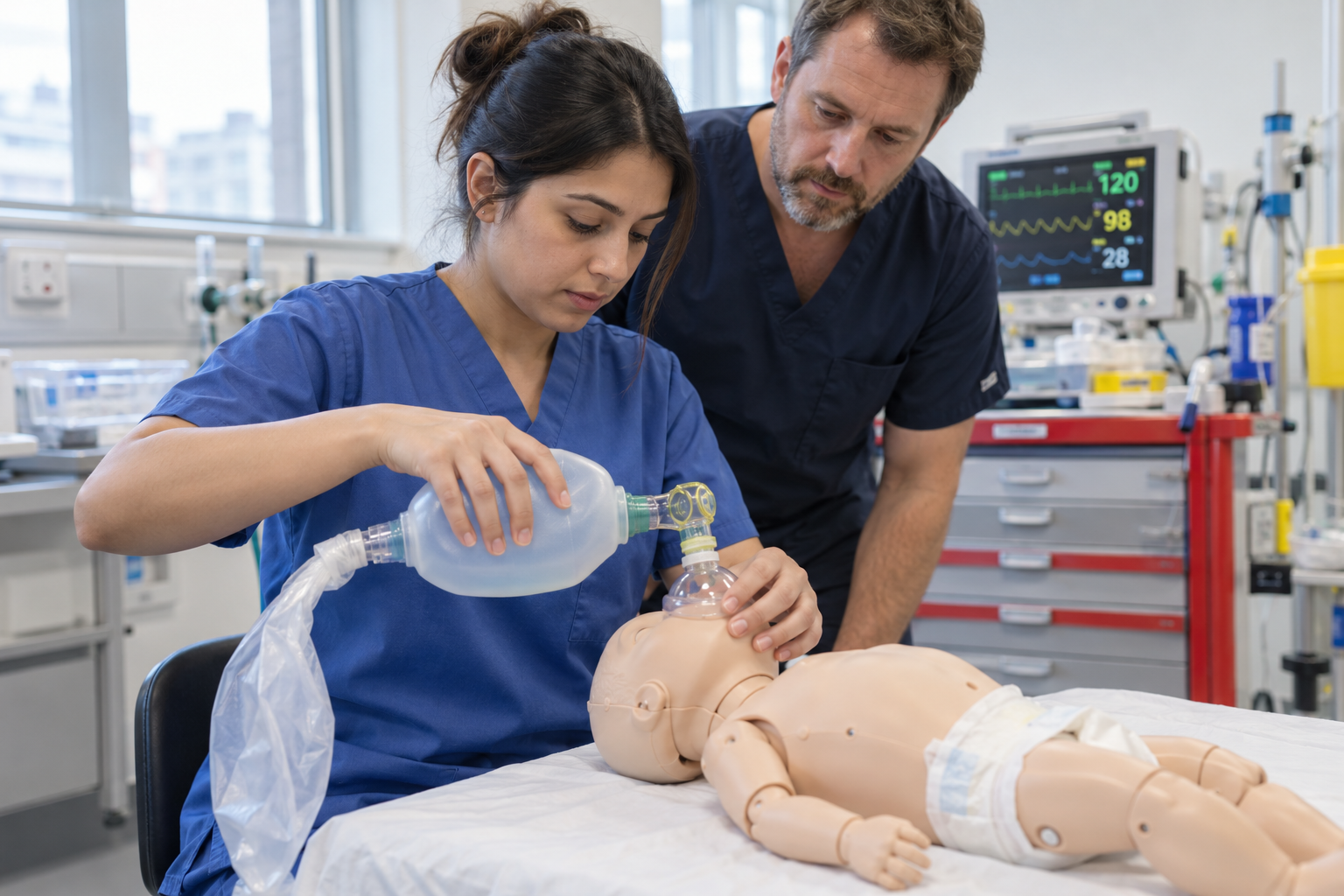
Recognising airway obstruction, respiratory distress and respiratory failure, with hands-on practice of airway manoeuvres, adjuncts, oxygen therapy and bag-mask ventilation. -
4 Circulation and shock
Clinical assessment of the circulation, the different causes of shock, vascular access, and fluid and blood-product considerations, with reassessment after each intervention. -
5 Paediatric cardiac arrest
Recognition of arrest, shockable and non-shockable rhythms, defibrillation, medication considerations, reversible causes and post-resuscitation stabilisation. -
6 Neurological emergencies
Structured assessment of reduced consciousness, seizures, status epilepticus, raised intracranial pressure and acute neurological deterioration. -
7 Trauma and the seriously injured child
A structured approach to airway problems, breathing compromise, haemorrhage, head injury and spinal considerations after serious injury, through to safe stabilisation and transfer. -
8 Simulation, teamwork and assessment
Scenario-based paediatric simulations and team exercises that bring every module together, with continuous faculty feedback and formal assessment as required by ALSG.
Course format
- Duration
- About 1 day online + 2 days face-to-face
- Made up of
- 1 day online learning + 2 days face-to-face practical training
- Delivery
- Skills stations, workshops, interactive teaching and paediatric simulation
- Classroom
- 9am start; finish time shown for each date
Assessment
- How you are assessed
- Faculty observe you continuously across both face-to-face days, alongside structured clinical scenarios and the knowledge assessments required by the current ALSG APLS programme.
- Practical assessment
- Structured paediatric clinical scenarios in which you apply the APLS approach, work as part of a team and communicate clearly.
- Written assessment
- Knowledge assessments as required by the current ALSG APLS course programme.
Certification
- Requirements
- Complete the online VLE learning and every face-to-face session, and show a safe, systematic approach to recognising, treating and stabilising paediatric emergencies to the ALSG standard. Booking or attendance alone does not guarantee a certificate.
- Certificate valid for
- 4 years
Training near you
PLAB Guide Training Centre delivers Advanced Paediatric Life Support (APLS) Course in Manchester, convenient for learners travelling from Levenshulme, Longsight, Burnage, Gorton, Didsbury and surrounding areas.
Related courses
You may also like
-
 View course
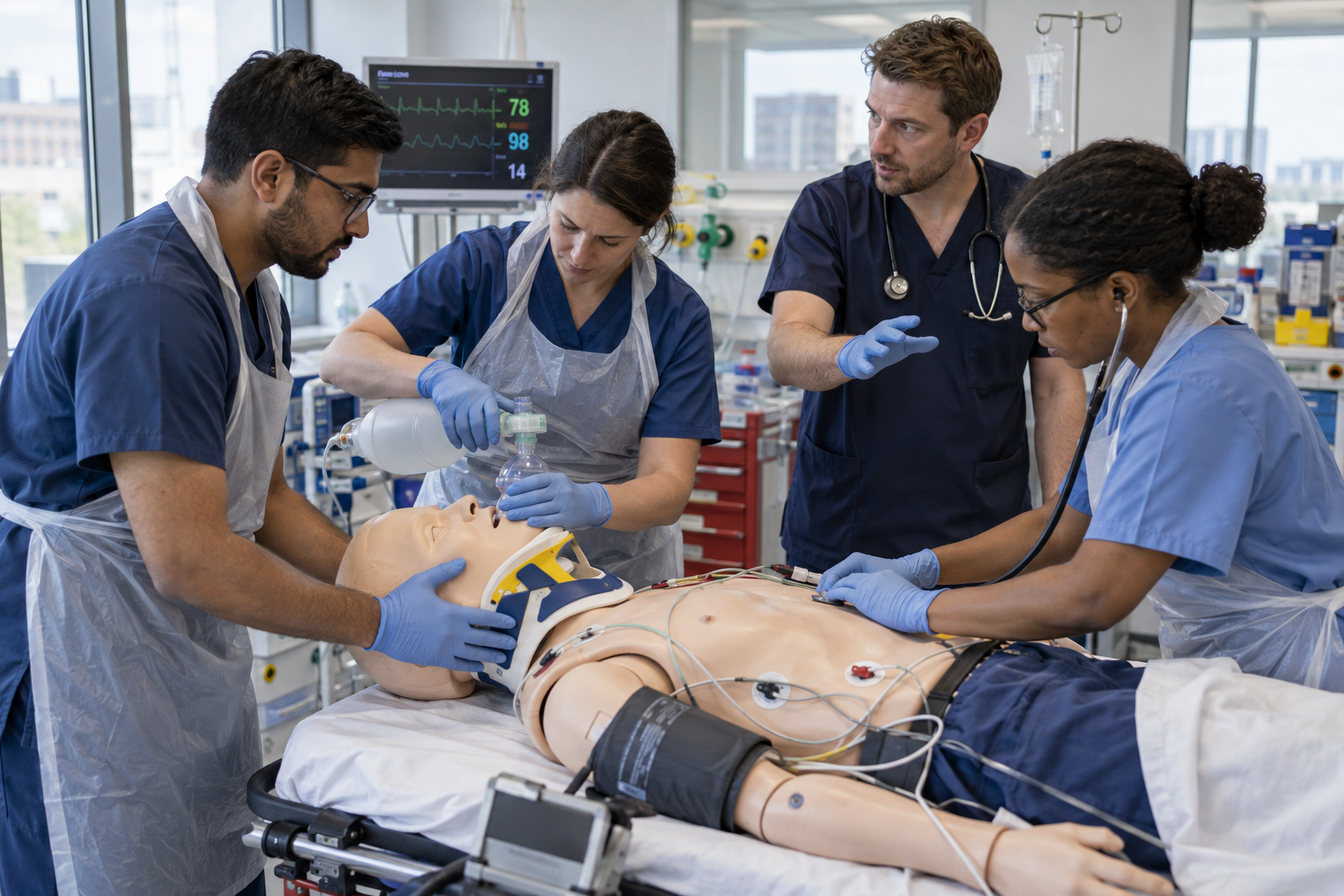
Advanced Trauma Life Support (ATLS®) Course in Manchester
This ATLS course in Manchester is the official RCS England Advanced Trauma Life Support (ATLS®) Provider programme, 11th Edition, taught at PLAB Guide Training Centre in…
Sat 19 – Sun 20 Dec, PLAB Guide Training Centre
Only 1 place left
-
 View course
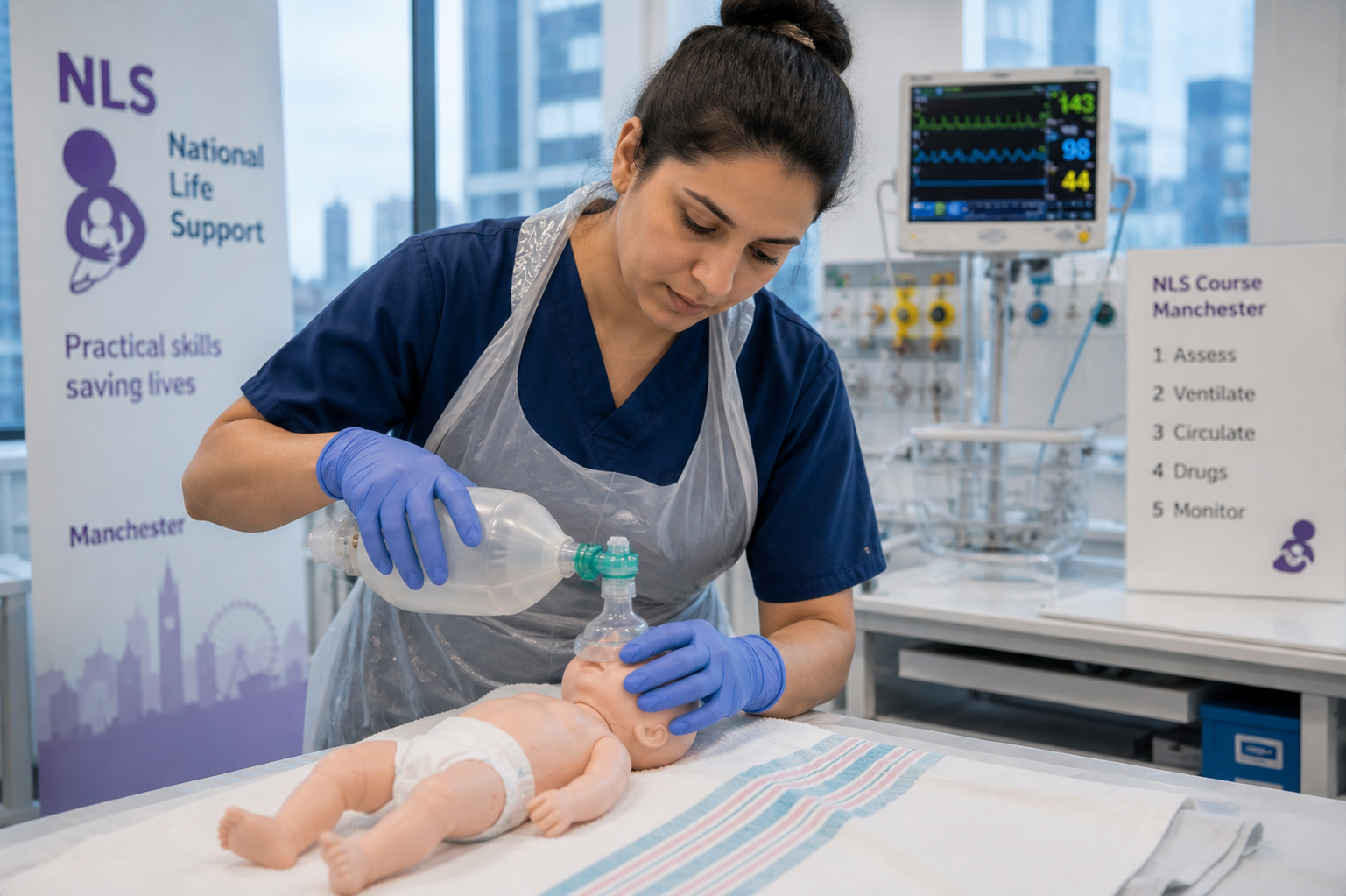
Newborn Life Support (NLS) Course in Manchester
The Newborn Life Support (NLS) course in Manchester is a one-day Resuscitation Council UK provider course for doctors, midwives, nurses and paramedics who care for babies at…
Fri 20 Nov, PLAB Guide Training Centre
Only 1 place left
Alternatives
-
 View course
European Paediatric Advanced Life Support (EPALS) Course in Manchester
Our EPALS course in Manchester is the Resuscitation Council UK European Paediatric Advanced Life Support provider course, run over two days at PLAB Guide Training Centre in…
Sat 7 – Sun 8 Nov, PLAB Guide Training Centre
Fast selling, 6 places left
Before this course
-
 View course
Paediatric Immediate Life Support (PILS) Course in Manchester
This PILS course in Manchester is the Resuscitation Council UK Paediatric Immediate Life Support course, delivered as ePILS: online learning in your own time, then a half-day…
Fri 6 Nov, PLAB Guide Training Centre
5 places available
See all Advanced & Specialist Life Support courses
Frequently asked questions
What is the difference between APLS and EPALS?
How long is the APLS certificate valid?
How much online learning is there before the course?
Do I get the APLS manual?
Am I eligible to book APLS?
Can I pay a deposit, or can my employer pay?
Is APLS CPD accredited?
What time do the face-to-face days start and finish?
Is there parking at the training centre?
Ready to book?
The next date with places is Saturday 21 – Sunday 22 November 2026
Book now