
Trauma Courses
Advanced Trauma Life Support (ATLS®) Course in Manchester
This ATLS course in Manchester is the official RCS England Advanced Trauma Life Support (ATLS®) Provider programme, 11th Edition, taught at PLAB Guide Training Centre in Levenshulme. It is for doctors at FY2 level and above, and for eligible Advanced Clinical Practitioners and hospital-based dentists who assess seriously injured patients. You complete 20–30 hours of e-learning, then two days of scenario-based training. Successful candidates gain ATLS® Provider status, valid for four years.
- RCS England ATLS® Provider course, 11th Edition
- About 20–30 hours of mandatory e-learning first
- Classroom days run 9am to 5pm
- Scenario stations with practical trauma testing
- Built on the 11th Edition xABCDE approach
- For doctors FY2 and above, plus eligible ACPs
- Deposit and interest-free instalment options
- Free dedicated parking at the centre
Course summary
- Qualification
- Royal College of Surgeons of England (RCS England) ATLS® Provider status (11th Edition)
- Duration
- 3-day blended course
- Format
- 1 day online learning + 2 days face-to-face practical training
- Location
- Manchester
- CPD
- 34
- Certificate valid for
- 4 years
- Price
- £875
- Next date
- Saturday 19 – Sunday 20 December 2026
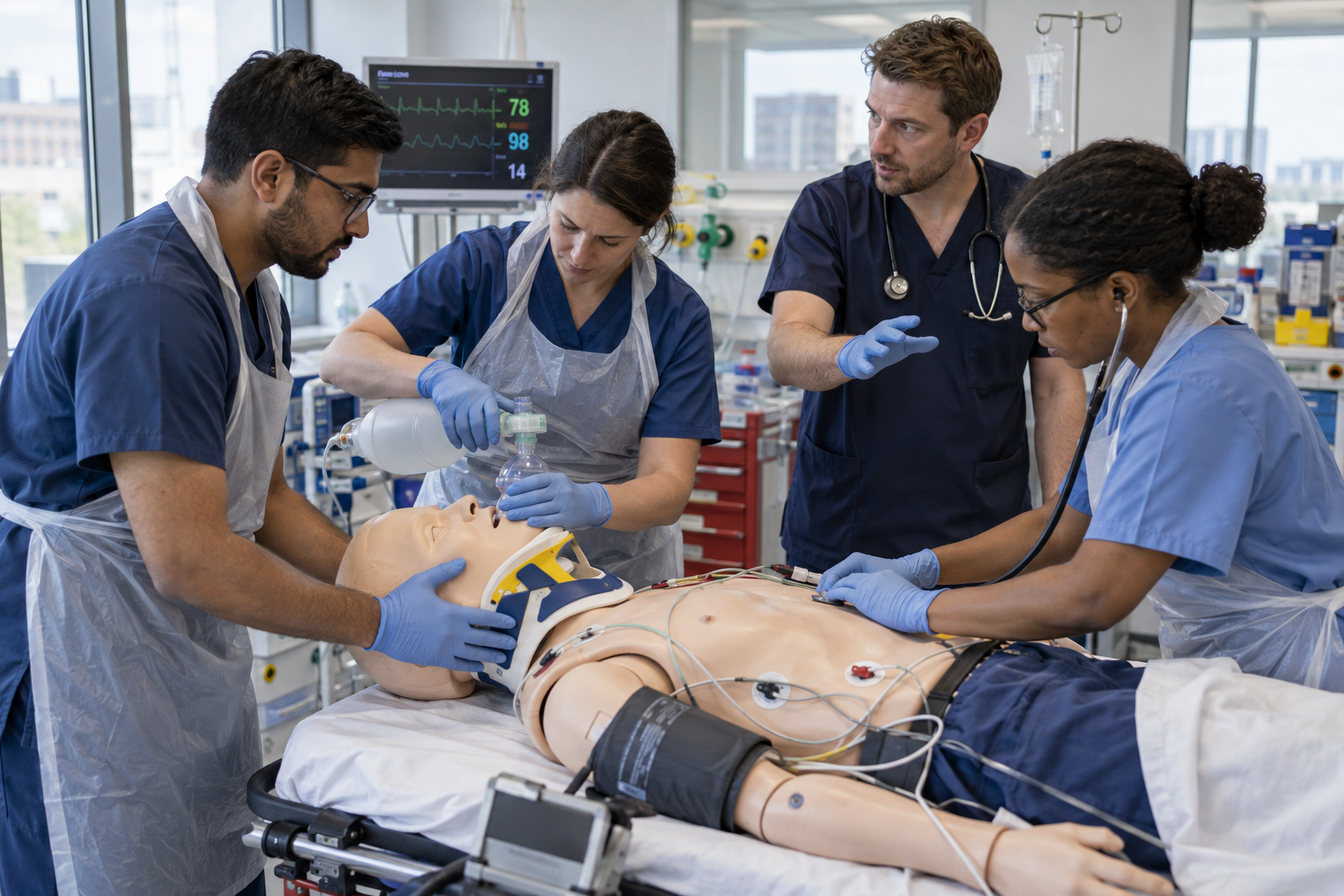
ATLS training in Manchester for clinicians who manage major trauma
Our ATLS course in Manchester gives you the systematic, prioritised approach to the injured patient that trauma teams around the world share. You take the official RCS England Advanced Trauma Life Support (ATLS®) Provider Course, 11th Edition, at our training centre in Levenshulme, South Manchester.
The 11th Edition puts catastrophic bleeding first with xABCDE: control exsanguinating haemorrhage, then work through airway, breathing, circulation, disability and exposure, treating each threat to life as you find it. After 20–30 hours of mandatory e-learning, two face-to-face days turn that knowledge into practised skill.
The e-learning takes real time, so choose a date below that leaves you room to finish it before the RCS deadline.
Why train for ATLS® with PLAB Guide in Manchester
PLAB Guide Training Centre is an approved ATLS® course centre and a Resuscitation Council UK Approved Centre for ILS, PILS, ILSi and EPALS, so trauma and resuscitation teaching is our everyday work. Your ATLS® faculty are experienced instructors who teach through intensive scenarios, realistic simulation on modern clinical equipment and structured feedback.
- Room to focus: an organised centre where you can concentrate on the trauma assessment the course asks of you.
- Easy to reach: free dedicated parking, free on-road parking nearby and good road and public transport links.
- Flexible payment: pay in full, secure your place with a deposit, or spread the cost in interest-free instalments.
- Employer-funded places: your employer can pay directly, with a purchase order or invoice if needed.
Further reading
- ATLS or ATLS Reverification: which course do you need?: When one-day reverification is enough and when you need the full course.
Upcoming ATLS course dates in Manchester
£875
Book this dateMore dates
Choosing a date takes you straight to booking with that date selected.
Course overview
ATLS® was developed by the American College of Surgeons and is delivered in the UK exclusively by the Royal College of Surgeons of England. It teaches one principle above all: find and treat the greatest threat to life first, using a framework you can repeat under pressure, even when information, resources or time are limited.
Before the course
Once you have booked and registered with RCS England, you get access to the ATLS® online learning. It holds the core knowledge for the course and must be completed in full by the RCS deadline. Allow 20–30 hours for it, plus time to review the manual and consolidate the trauma algorithms.
The two classroom days
The face-to-face course runs from 9am to 5pm on both days. You learn through interactive discussions, demonstrations, triage exercises and scenario stations. In the scenarios you practise the initial assessment of a seriously injured patient: primary survey, resuscitation, adjuncts, reassessment, secondary survey and planning for definitive care. Throughout the course the emphasis is on prioritisation, not on reaching every diagnosis before treatment begins. Your trauma assessment is tested during the course.
Who this course is for
ATLS® is for clinicians who meet seriously injured patients and need a dependable way to lead the first critical minutes. If you work in emergency medicine, surgery, anaesthesia, critical care, orthopaedics or acute care, the course gives you a common framework with the rest of the trauma team, sharper prioritisation when several problems compete, and the confidence to act on time-critical injuries.
It is also a recognised step for clinicians moving towards senior roles, or following a specialty pathway that expects trauma training.
Who should attend
- Doctors at FY2 level and above
- Staff-grade doctors of equivalent seniority
- Advanced Clinical Practitioners, once eligibility is confirmed
- Hospital-based dentists, once eligibility is confirmed
- Clinicians in emergency medicine, trauma services, surgery, anaesthesia, critical care, orthopaedics and acute care
- Pre-hospital and retrieval clinicians, where eligible
Entry requirements
- You must be a doctor at FY2 level or above, an equivalent staff-grade doctor, or an eligible Advanced Clinical Practitioner or hospital-based dentist. ACPs and dentists should confirm eligibility with us or RCS England before booking.
- You need an RCS England contact number (unique ID) to book. If you do not have one, register with RCS England first.
- The booking form asks for your professional body and registration number (for example GMC or GDC), your place of work and your role.
- You must complete all mandatory pre-course e-learning, about 20–30 hours, by the RCS deadline.
- Review the ATLS® manual and trauma algorithms before you attend.
What you will learn
- Apply the xABCDE sequence, controlling catastrophic external haemorrhage before airway, breathing and circulation
- Perform a systematic primary survey, treating life-threatening problems as you find them
- Recognise haemorrhagic shock and start resuscitation without delaying definitive bleeding control
- Assess and protect the airway while taking account of possible cervical spine injury
- Identify immediately life-threatening chest injuries and begin initial treatment
- Assess neurological status with the Glasgow Coma Scale and pupils, and act to prevent secondary brain injury
- Recognise patients who need urgent surgery, specialist input or transfer, and plan definitive care
- Communicate and lead effectively within a trauma team
Course content
-
1 Initial assessment and the xABCDE approach
The core ATLS framework: immediate priorities, primary survey and resuscitation, adjuncts, reassessment and the secondary survey. The 11th Edition adds control of exsanguinating haemorrhage at the very start.By the end of this part you will be able to:
- Run a structured primary survey in the correct order
- Decide which adjuncts are needed during the primary survey
- Know when the secondary survey should wait
-
2 Airway and cervical spine
Recognising the threatened airway, basic and advanced airway considerations, oxygenation and ventilation, and cervical spine protection throughout.By the end of this part you will be able to:
- Spot early signs of airway compromise
- Judge when airway intervention must take priority
- Escalate for advanced airway support in good time
-
3 Thoracic trauma
Recognition and initial treatment of serious chest injuries that can cause rapid deterioration, combining clinical assessment, immediate treatment, imaging where appropriate and specialist escalation.By the end of this part you will be able to:
- Link chest findings to immediate lifesaving treatment
- Reassess after each chest intervention
-
4 Haemorrhage and shock
A structured approach to haemorrhagic shock: controlling external bleeding, looking for internal bleeding, starting resuscitation and judging the response to treatment.By the end of this part you will be able to:
- Search systematically for sources of internal bleeding
- Interpret a patient's response to initial resuscitation
-
5 Head and neurological trauma
Initial assessment of the patient with neurological injury, including level of consciousness, Glasgow Coma Scale, pupils, recognising deterioration and choosing appropriate imaging.By the end of this part you will be able to:
- Detect neurological deterioration on repeated assessment
- Know when to involve neurosurgical or specialist teams
-
6 Musculoskeletal injury and special circumstances
Principles for pelvic, limb and spinal injury and burns, and for trauma in children, older people and pregnancy.By the end of this part you will be able to:
- Adapt the ATLS approach for children, older adults and pregn
- Recognise pelvic and limb injuries that affect circulation
-
7 Teamwork, transfer and definitive care
Team communication, shared mental models and leadership, together with trauma systems, disaster preparedness, prioritising investigations and planning transfer.By the end of this part you will be able to:
- Share a clear plan with the trauma team
- Organise a safe transfer to definitive care
Course format
- Duration
- 3-day blended course
- Made up of
- 1 day online learning + 2 days face-to-face practical training
- Delivery
- Pre-course e-learning, then scenario-based classroom teaching
- Online learning
- About 20–30 hours of mandatory e-learning
- Classroom
- 9am – 5pm on both days
Assessment
- How you are assessed
- You are assessed against the official ATLS® Provider course requirements, including your ability to show a safe, prioritised and systematic approach to managing a trauma patient.
- Practical assessment
- Practical testing of your initial assessment and management of a simulated trauma patient.
Certification
- Requirements
- Complete all mandatory e-learning by the RCS deadline, attend the two-day course and meet the minimum standard in the ATLS® Provider assessment. There is no automatic resit; a candidate who does not reach the standard may need to take another Provider course.
- Certificate valid for
- 4 years
Training near you
PLAB Guide Training Centre delivers Advanced Trauma Life Support (ATLS®) Course in Manchester, convenient for learners travelling from Levenshulme, Longsight, Burnage, Gorton, Didsbury and surrounding areas.
Related courses
You may also like
-
 View course
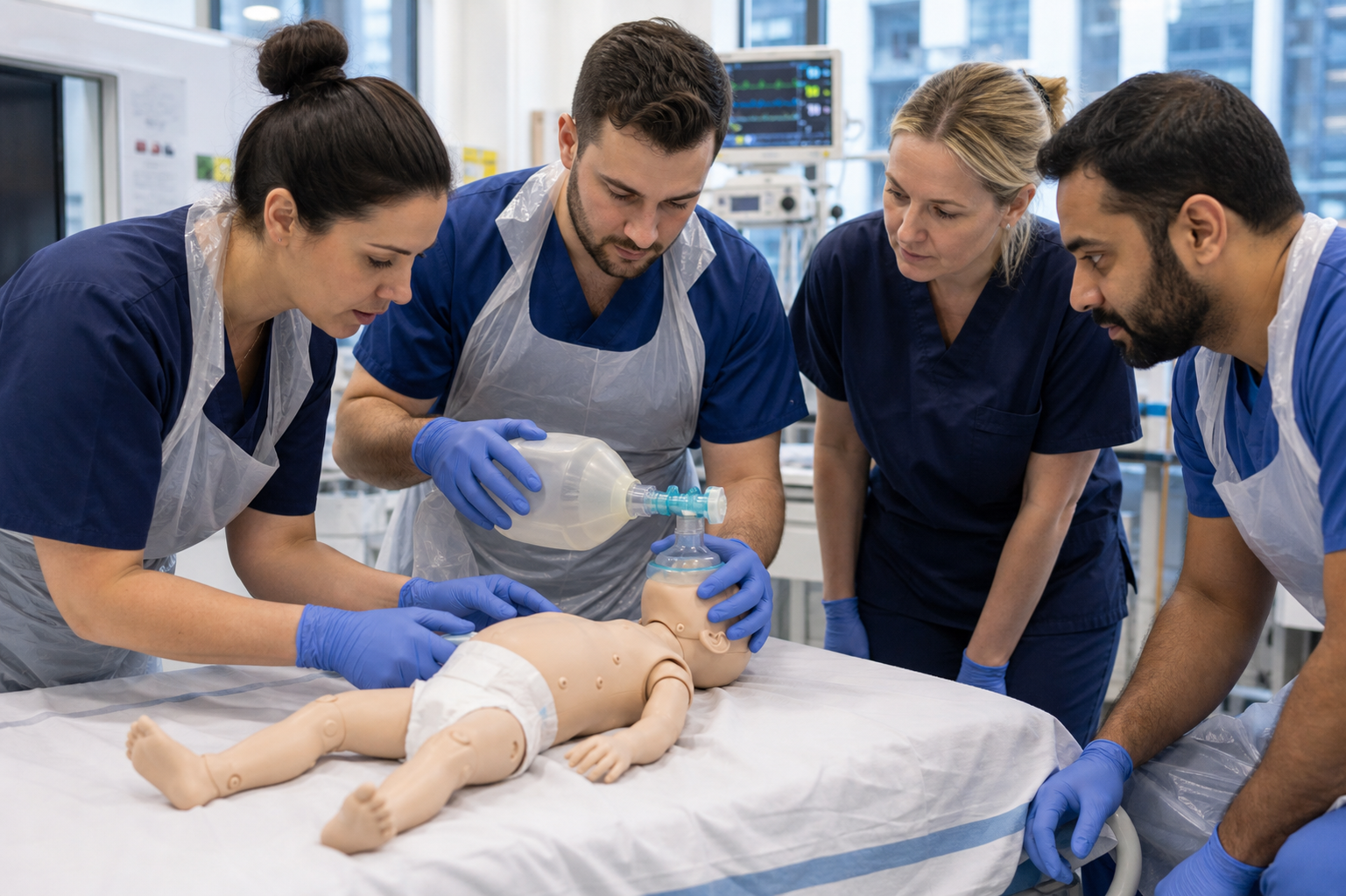
Advanced Paediatric Life Support (APLS) Course in Manchester
Our APLS course in Manchester is the ALSG Advanced Paediatric Life Support programme (7th Edition), delivered at an approved APLS centre in Levenshulme. It is built for doctors…
Sat 21 – Sun 22 Nov, PLAB Guide Training Centre
16 places available
-
 View course
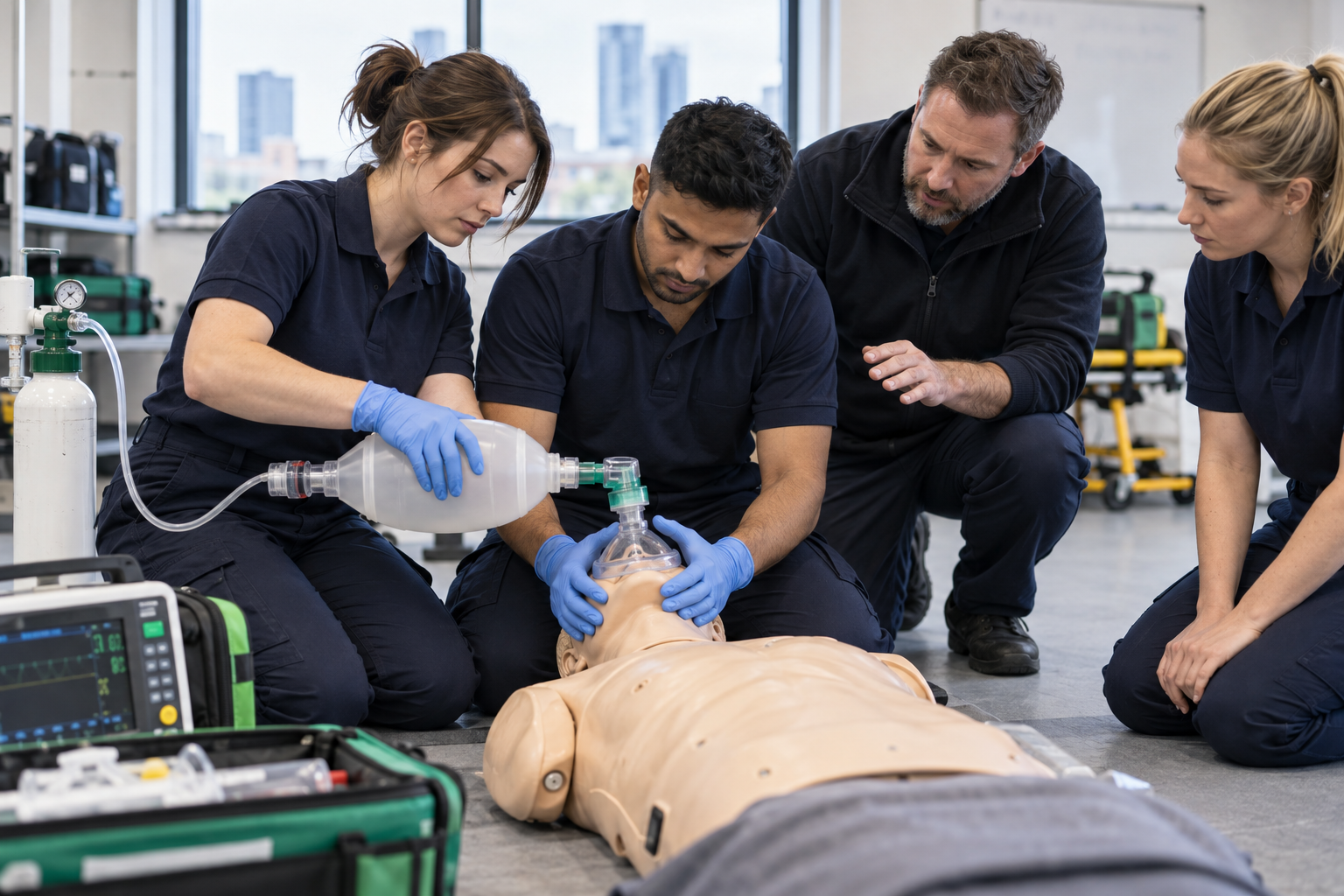
First Response Emergency Care Level 3 (FREC 3) Course in Manchester
Our FREC 3 course in Manchester is a five-day, face-to-face programme leading to the Qualsafe Level 3 Award in First Response Emergency Care (RQF). It is designed for event…
Mon 26 – Fri 30 Oct, PLAB Guide Training Centre
12 places available
Alternatives
-
 View course
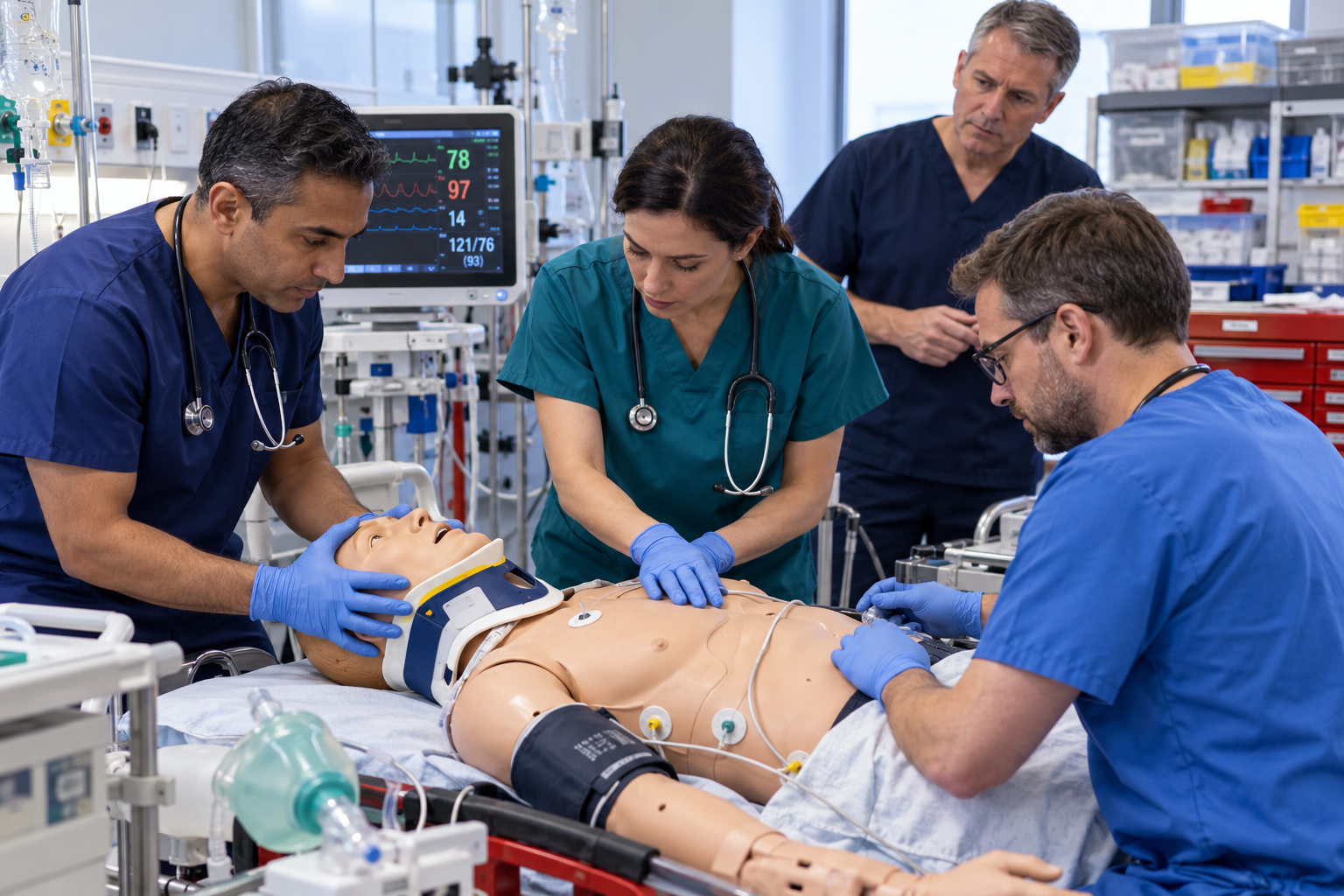
ATLS Reverification Course Manchester (11th Edition)
The ATLS reverification course in Manchester lets experienced ATLS® Providers renew their Provider status in a single day, without repeating the two-day Provider course…
Sat 28 Nov, PLAB Guide Training Centre
11 places available
Frequently asked questions
How much does the ATLS course in Manchester cost?
How long does ATLS Provider status last?
How long does the ATLS pre-course e-learning take?
Can Advanced Clinical Practitioners or dentists take ATLS?
What do I need before I can book ATLS?
What happens if I do not pass the ATLS course?
How many CPD points does ATLS carry?
Can I become an ATLS instructor after the course?
What changed in the ATLS 11th Edition?
Is there parking at the ATLS training centre?
Ready to book?
The next date with places is Saturday 19 – Sunday 20 December 2026
Book now