


Page 39 - Demo
P. 39
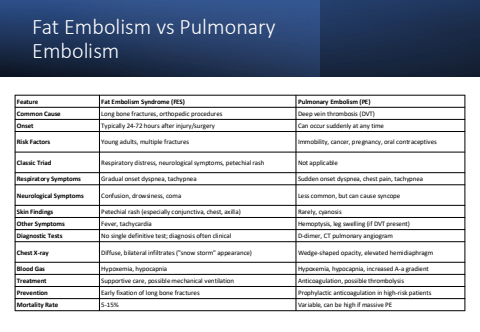
Fat Embolism vs Pulmonary EmbolismFeature Fat Embolism Syndrome (FES) Pulmonary Embolism (PE)Common Cause Long bone fractures, orthopedic procedures Deep vein thrombosis (DVT)Onset Typically 24-72 hours after injury/surgery Can occur suddenly at any timeRisk Factors Young adults, multiple fractures Immobility, cancer, pregnancy, oral contraceptivesClassic Triad Respiratory distress, neurological symptoms, petechial rash Not applicableRespiratory Symptoms Gradual onset dyspnea, tachypnea Sudden onset dyspnea, chest pain, tachypneaNeurological Symptoms Confusion, drowsiness, coma Less common, but can cause syncopeSkin Findings Petechial rash (especially conjunctiva, chest, axilla) Rarely, cyanosisOther Symptoms Fever, tachycardia Hemoptysis, leg swelling (if DVT present)Diagnostic Tests No single definitive test; diagnosis often clinical D-dimer, CT pulmonary angiogramChest X-ray Diffuse, bilateral infiltrates (\Wedge-shaped opacity, elevated hemidiaphragmBlood Gas Hypoxemia, hypocapnia Hypoxemia, hypocapnia, increased A-a gradientTreatment Supportive care, possible mechanical ventilation Anticoagulation, possible thrombolysisPrevention Early fixation of long bone fractures Prophylactic anticoagulation in high-risk patientsMortality Rate 5-15% Variable, can be high if massive PE


