


Page 37 - Demo
P. 37
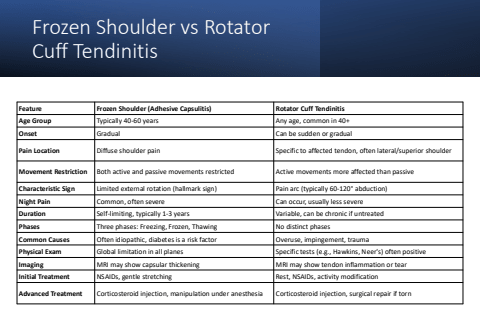
Frozen Shoulder vs Rotator Cuff TendinitisFeature Frozen Shoulder (Adhesive Capsulitis) Rotator Cuff TendinitisAge Group Typically 40-60 years Any age, common in 40+Onset Gradual Can be sudden or gradualPain Location Diffuse shoulder pain Specific to affected tendon, often lateral/superior shoulderMovement Restriction Both active and passive movements restricted Active movements more affected than passiveCharacteristic Sign Limited external rotation (hallmark sign) Pain arc (typically 60-120%u00b0 abduction)Night Pain Common, often severe Can occur, usually less severeDuration Self-limiting, typically 1-3 years Variable, can be chronic if untreatedPhases Three phases: Freezing, Frozen, Thawing No distinct phasesCommon Causes Often idiopathic, diabetes is a risk factor Overuse, impingement, traumaPhysical Exam Global limitation in all planes Specific tests (e.g., Hawkins, Neer's) often positiveImaging MRI may show capsular thickening MRI may show tendon inflammation or tearInitial Treatment NSAIDs, gentle stretching Rest, NSAIDs, activity modificationAdvanced Treatment Corticosteroid injection, manipulation under anesthesia Corticosteroid injection, surgical repair if torn


