


Page 54 - Demo
P. 54
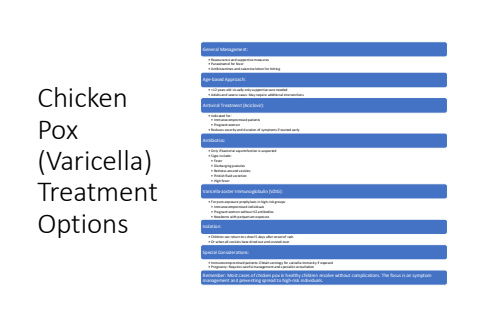
Chicken Pox (Varicella) Treatment OptionsGeneral Management:%u2022 Reassurance and supportive measures%u2022 Paracetamol for fever%u2022 Antihistamines and calamine lotion for itchingAge-based Approach:%u2022 <12 years old: Usually only supportive care needed%u2022 Adults and severe cases: May require additional interventionsAntiviral Treatment (Aciclovir):%u2022 Indicated for:%u2022 Immunocompromised patients%u2022 Pregnant women%u2022 Reduces severity and duration of symptoms if started earlyAntibiotics:%u2022 Only if bacterial superinfection is suspected%u2022 Signs include:%u2022 Fever%u2022 Discharging pustules%u2022 Redness around vesicles%u2022 Pinkish fluid secretion%u2022 High feverVaricella-zoster Immunoglobulin (VZIG):%u2022 For post-exposure prophylaxis in high-risk groups:%u2022 Immunocompromised individuals%u2022 Pregnant women without VZ antibodies%u2022 Newborns with peripartum exposureIsolation:%u2022 Children can return to school 5 days after onset of rash%u2022 Or when all vesicles have dried out and crusted overSpecial Considerations:%u2022 Immunocompromised patients: Obtain serology for varicella immunity if exposed%u2022 Pregnancy: Requires careful management and specialist consultationRemember: Most cases of chicken pox in healthy children resolve without complications. The focus is on symptom management and preventing spread to high-risk individuals.


