


Page 106 - Demo
P. 106
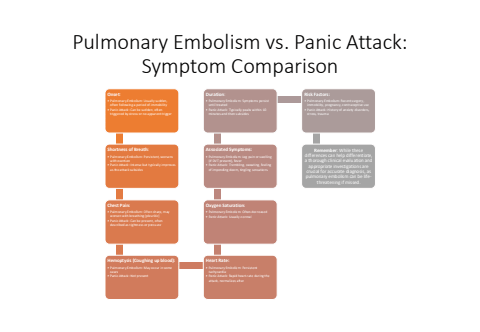
Pulmonary Embolism vs. Panic Attack: Symptom ComparisonOnset:%u2022 Pulmonary Embolism: Usually sudden, often following a period of immobility%u2022 Panic Attack: Can be sudden, often triggered by stress or no apparent triggerShortness of Breath:%u2022 Pulmonary Embolism: Persistent, worsens with exertion%u2022 Panic Attack: Intense but typically improves as the attack subsidesChest Pain:%u2022 Pulmonary Embolism: Often sharp, may worsen with breathing (pleuritic)%u2022 Panic Attack: Can be present, often described as tightness or pressureHemoptysis (Coughing up blood):%u2022 Pulmonary Embolism: May occur in some cases%u2022 Panic Attack: Not presentHeart Rate:%u2022 Pulmonary Embolism: Persistent tachycardia%u2022 Panic Attack: Rapid heart rate during the attack, normalizes afterOxygen Saturation:%u2022 Pulmonary Embolism: Often decreased%u2022 Panic Attack: Usually normalAssociated Symptoms:%u2022 Pulmonary Embolism: Leg pain or swelling (if DVT present), fever%u2022 Panic Attack: Trembling, sweating, feeling of impending doom, tingling sensationsDuration:%u2022 Pulmonary Embolism: Symptoms persist until treated%u2022 Panic Attack: Typically peaks within 10 minutes and then subsidesRisk Factors:%u2022 Pulmonary Embolism: Recent surgery, immobility, pregnancy, contraceptive use%u2022 Panic Attack: History of anxiety disorders, stress, traumaRemember: While these differences can help differentiate, a thorough clinical evaluation and appropriate investigations are crucial for accurate diagnosis, as pulmonary embolism can be lifethreatening if missed.


