


Page 24 - Demo
P. 24
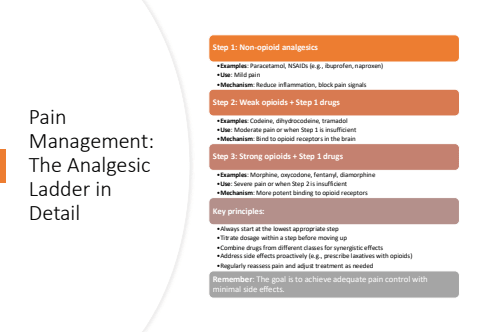
Pain Management: The Analgesic Ladder in DetailStep 1: Non-opioid analgesics%u2022Examples: Paracetamol, NSAIDs (e.g., ibuprofen, naproxen)%u2022Use: Mild pain%u2022Mechanism: Reduce inflammation, block pain signalsStep 2: Weak opioids + Step 1 drugs%u2022Examples: Codeine, dihydrocodeine, tramadol%u2022Use: Moderate pain or when Step 1 is insufficient%u2022Mechanism: Bind to opioid receptors in the brainStep 3: Strong opioids + Step 1 drugs%u2022Examples: Morphine, oxycodone, fentanyl, diamorphine%u2022Use: Severe pain or when Step 2 is insufficient%u2022Mechanism: More potent binding to opioid receptorsKey principles:%u2022Always start at the lowest appropriate step%u2022Titrate dosage within a step before moving up%u2022Combine drugs from different classes for synergistic effects%u2022Address side effects proactively (e.g., prescribe laxatives with opioids)%u2022Regularly reassess pain and adjust treatment as neededRemember: The goal is to achieve adequate pain control with minimal side effects.


